🌟 doodling How To Doodle For Beginners Step By Step
& Painting
No rigid rules or pretension. Just practical guides, medium comparisons, and encouraging tips to help you enjoy the drawing & painting process.
Doodling is a wonderful way to relax your mind and express creativity. I’ve personally found immense joy in letting my pen wander freely, transforming blank pages into whimsical scenes. This guide will help you discover that same simple pleasure, starting right from the basics.
You don’t need artistic talent to doodle; you just need a willingness to play. Let’s get you started on this fun, no-pressure journey.
Quick Overview
This guide will walk you through the fundamentals of doodling, from setting up your space to creating your first simple drawings. You’ll learn how to build confidence and enjoy the process without judgment.
- Time needed: 30 minutes to an hour for your first session, ongoing practice recommended
- Difficulty: Beginner
- What you’ll need: Paper, a pen or pencil
Step-by-Step Instructions
Step 1: Gather Your Simple Tools
You truly don’t need much to begin doodling. A basic pen and a piece of paper are perfect. Don’t worry about fancy art supplies for now.
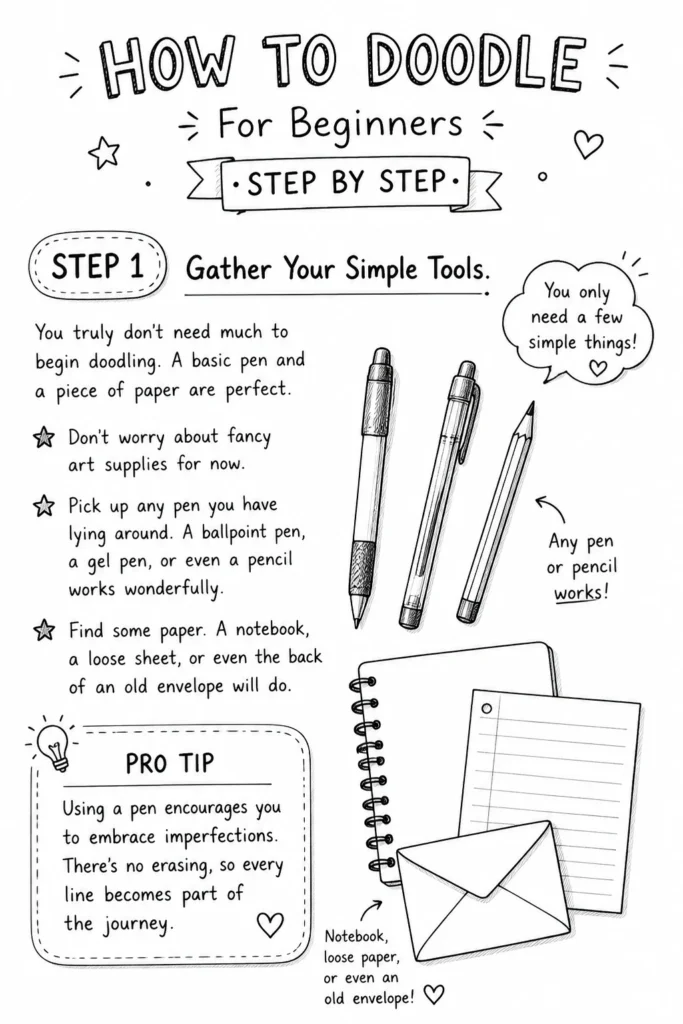
Pick up any pen you have lying around. A ballpoint pen, a gel pen, or even a pencil works wonderfully.
Find some paper. A notebook, a loose sheet, or even the back of an old envelope will do. The goal is to remove any barriers to starting.
Pro Tip: Using a pen encourages you to embrace imperfections. There’s no erasing, so every line becomes part of the journey.
Step 2: Find Your Doodle Zone
Doodling is about relaxation, so choose a comfortable spot. This could be your desk, a comfy chair, or even a quiet corner of a cafe.
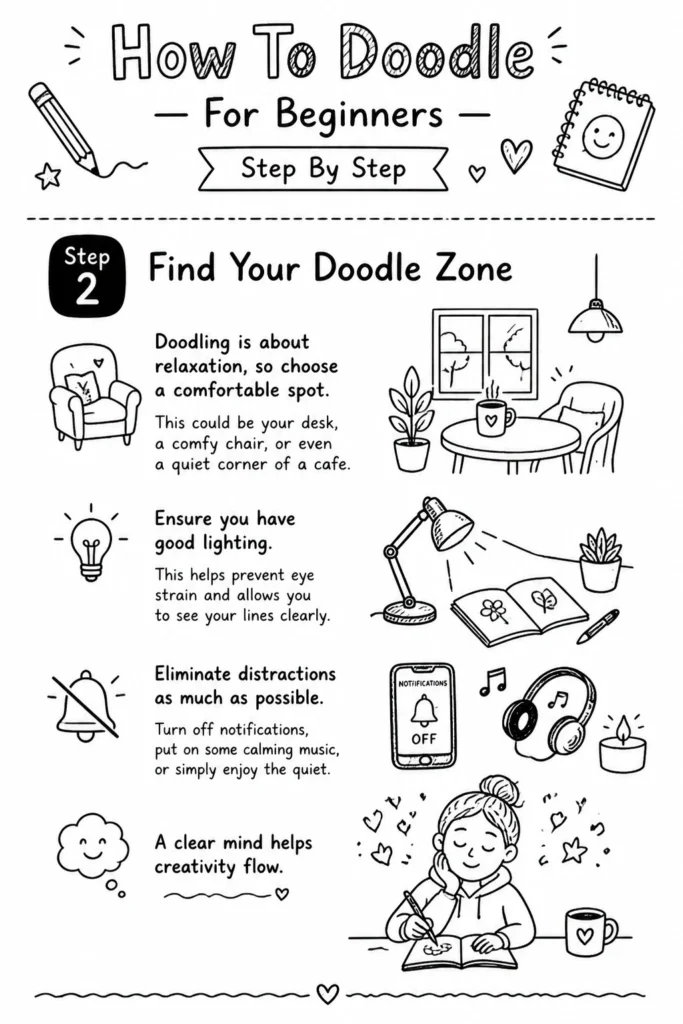
Ensure you have good lighting. This helps prevent eye strain and allows you to see your lines clearly.
Eliminate distractions as much as possible. Turn off notifications, put on some calming music, or simply enjoy the quiet. A clear mind helps creativity flow.
Step 3: Start with Basic Shapes
All complex doodles are built from simple shapes. Begin by drawing circles, squares, triangles, and squiggly lines. This helps warm up your hand and mind.
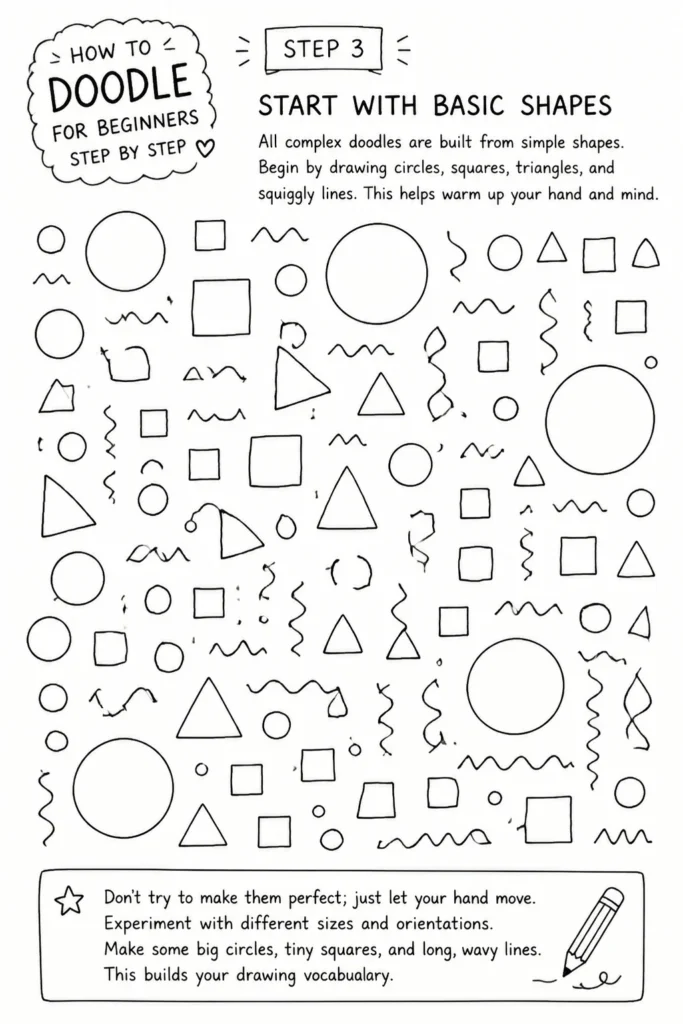
Draw a page full of these fundamental shapes. Don’t try to make them perfect; just let your hand move.
Experiment with different sizes and orientations. Make some big circles, tiny squares, and long, wavy lines. This builds your drawing vocabulary.
Step 4: Connect and Combine Your Shapes
Now, let’s bring those basic shapes together. Think about how they might interact or overlap. This is where the magic of doodling begins.
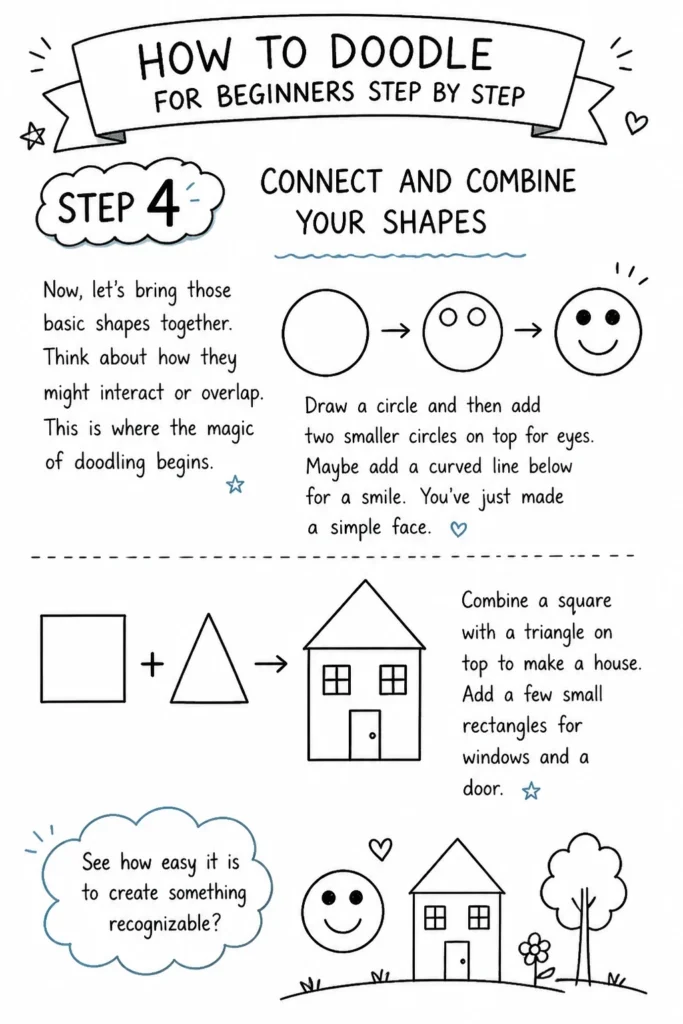
Draw a circle and then add two smaller circles on top for eyes. Maybe add a curved line below for a smile. You’ve just made a simple face.
Combine a square with a triangle on top to make a house. Add a few small rectangles for windows and a door. See how easy it is to create something recognizable?
Step 5: Add Repeating Patterns and Textures
Patterns are a doodler’s best friend. They add interest and fill space effortlessly. Think about lines, dots, and simple motifs.
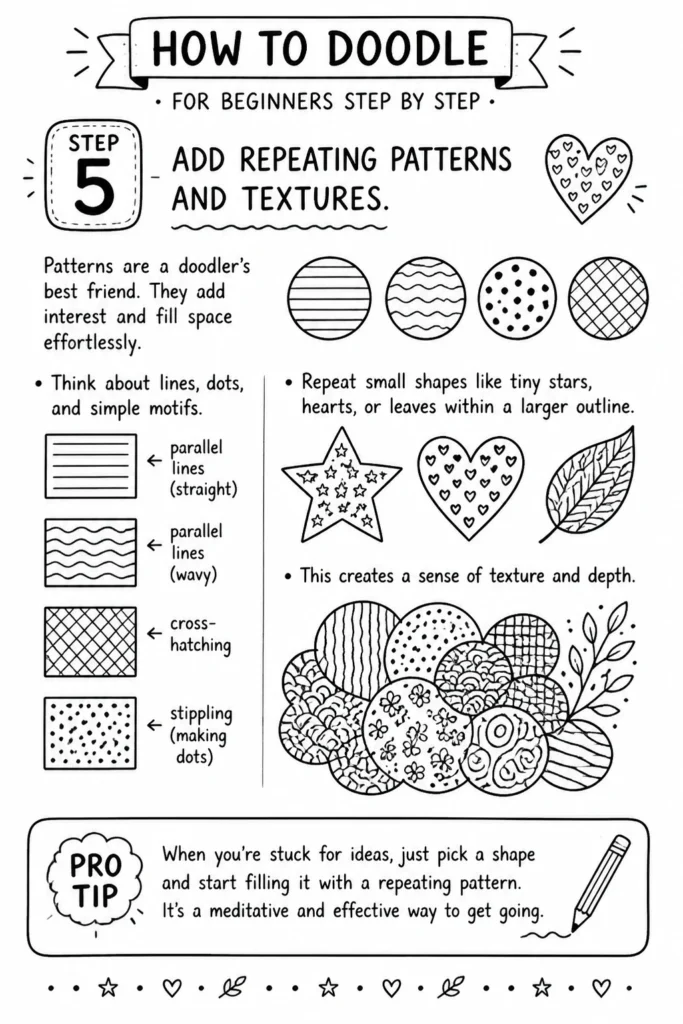
Fill a shape with parallel lines, either straight or wavy. Try cross-hatching or stippling (making dots).
Repeat small shapes like tiny stars, hearts, or leaves within a larger outline. This creates a sense of texture and depth.
Pro Tip: When you’re stuck for ideas, just pick a shape and start filling it with a repeating pattern. It’s a meditative and effective way to get going.
Step 6: Experiment with Lines and Weight
The thickness and quality of your lines can dramatically change a doodle’s feel. Play with making some lines bolder and others lighter.
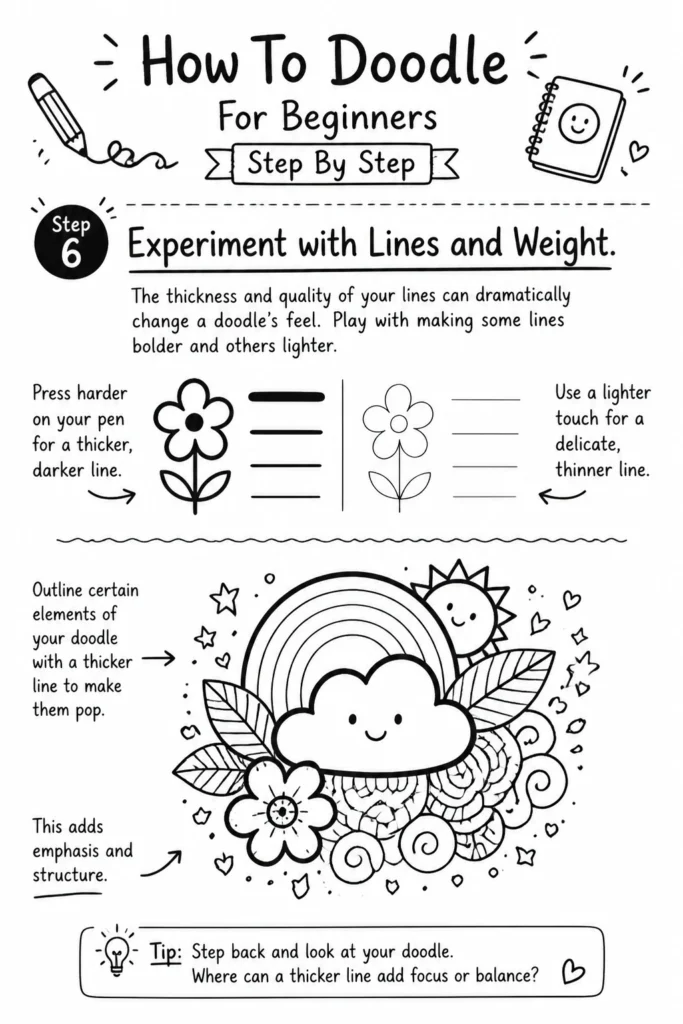
Press harder on your pen for a thicker, darker line. Use a lighter touch for a delicate, thinner line.
Outline certain elements of your doodle with a thicker line to make them pop. This adds emphasis and structure.
Step 7: Explore Simple Themes and Objects
Once you’re comfortable with shapes and patterns, try doodling simple objects or themes. Think about things you see every day.
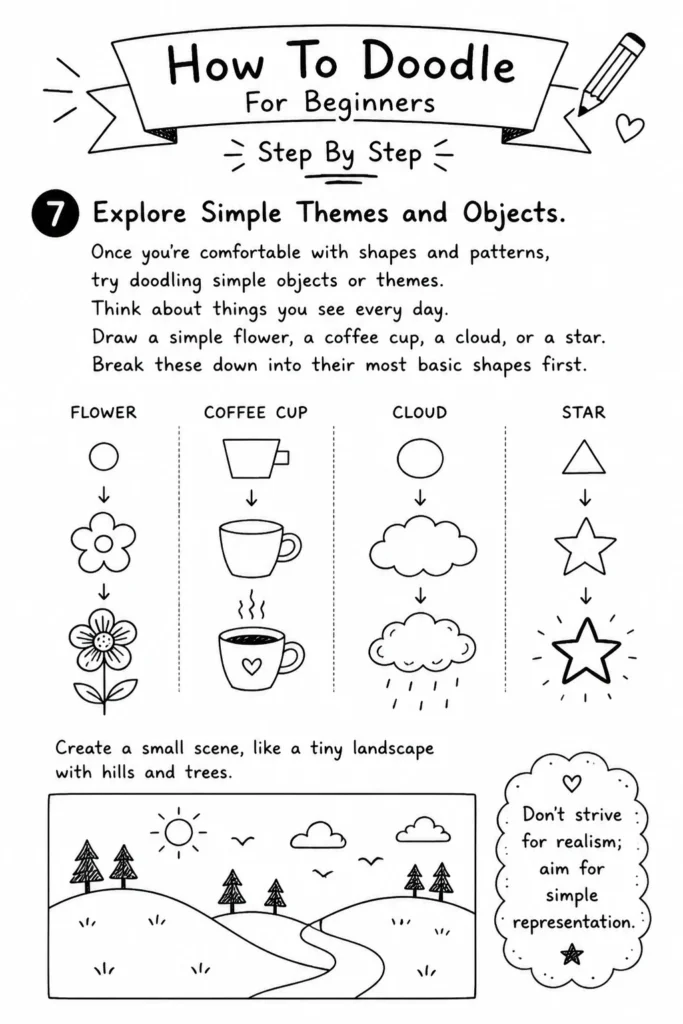
Draw a simple flower, a coffee cup, a cloud, or a star. Break these down into their most basic shapes first.
Create a small scene, like a tiny landscape with hills and trees. Don’t strive for realism; aim for simple representation.
Step 8: Embrace Imperfection and Playfulness
The biggest secret to doodling is letting go of the need for perfection. Doodles are meant to be spontaneous and fun.
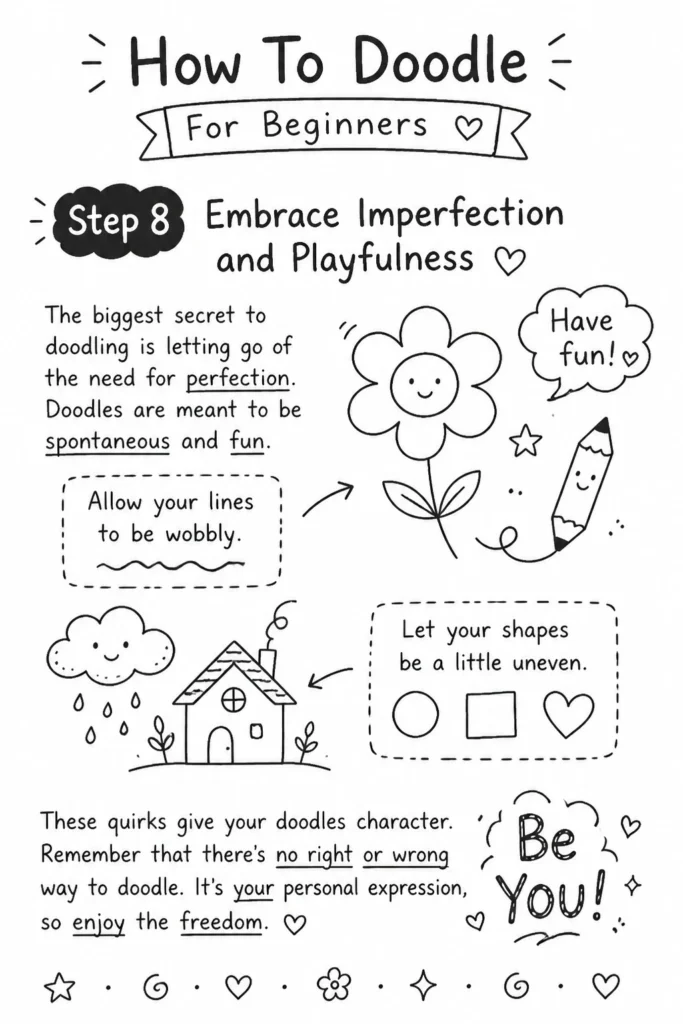
Allow your lines to be wobbly. Let your shapes be a little uneven. These quirks give your doodles character.
Remember that there’s no right or wrong way to doodle. It’s your personal expression, so enjoy the freedom.
Step 9: Practice Consistently
Like any skill, doodling improves with practice. The more you doodle, the more comfortable and confident you’ll become.
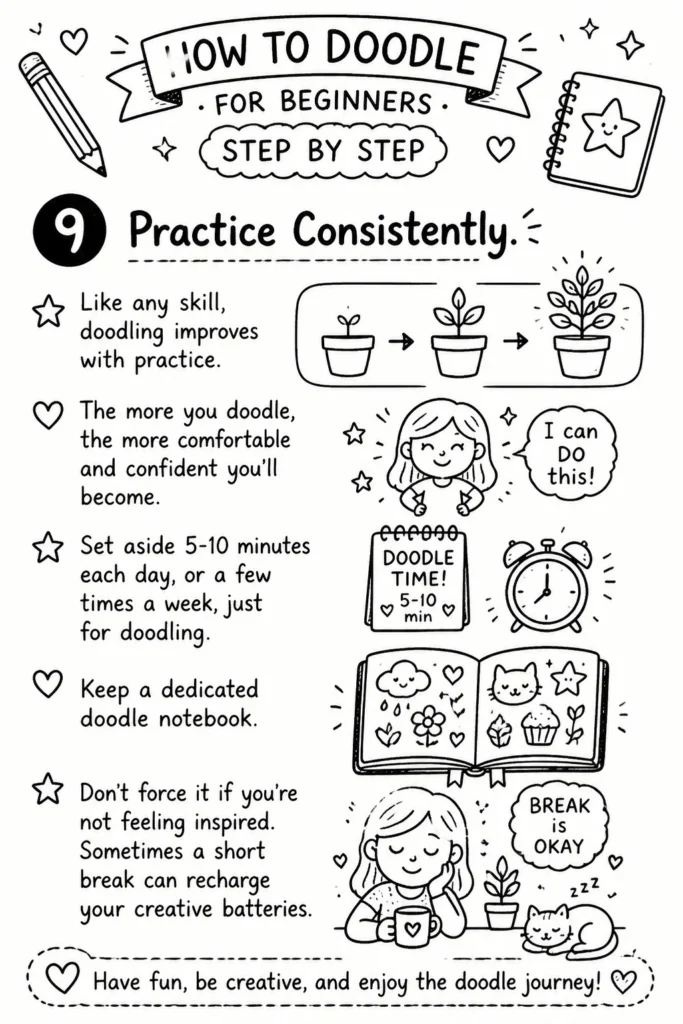
Set aside 5-10 minutes each day, or a few times a week, just for doodling. Keep a dedicated doodle notebook.
Don’t force it if you’re not feeling inspired. Sometimes a short break can recharge your creative batteries.
Common Mistakes to Avoid
Trying to Be Perfect
Many beginners get discouraged because their doodles don’t look like professional artwork. Doodling is not about perfection; it’s about process and enjoyment. Let go of the need for flawless lines and embrace the organic, spontaneous nature of your drawings. Your unique style will emerge naturally.
Comparing Your Doodles to Others
It’s easy to look at intricate doodles online and feel inadequate. Everyone starts somewhere, and every artist has a unique style. Focus on your own progress and the joy you find in creating, rather than measuring yourself against others. Your doodling journey is personal.
Overthinking What to Draw
Sometimes the blank page feels intimidating, and you might get stuck trying to come up with a “good” idea. This can lead to creative block. Instead of overthinking, just start with a simple shape or a random line. Let one element lead to the next without a grand plan.
Using the Wrong Tools (Too Complicated)
Beginning with too many fancy art supplies can be overwhelming and distracting. You might feel pressure to use them “correctly.” Stick to a simple pen and paper initially. This minimalist approach allows you to focus purely on the act of drawing, not on mastering tools.
Troubleshooting
“My doodles look messy and unorganized.”
If your doodles feel chaotic, try focusing on containment. Draw a simple border or a large shape first, and then doodle within that confined space. This can give your composition a more structured feel. You can also try using a consistent line weight for a cleaner look.
“I run out of ideas very quickly.”
Creative blocks happen to everyone. When you’re stuck, look around you for inspiration. Doodle objects on your desk, patterns on your clothes, or shapes from nature. You can also use online doodle prompts or simply start by drawing a random line and seeing where it takes you.
“I feel discouraged because my drawings don’t look good.”
Remember that doodling is a practice, not a performance. It’s about the act of creating and expressing yourself, not about producing a masterpiece. Focus on the feeling of the pen on paper and the relaxation it brings. Celebrate small wins, like a cool new pattern you discovered, and remind yourself it’s all part of the learning process.
Key Takeaways
- Doodling is accessible to everyone, regardless of artistic skill.
- Start with minimal tools: just a pen and paper are enough.
- Break down complex ideas into basic shapes like circles, squares, and lines.
- Embrace imperfections; they add character and charm to your doodles.
- Regular practice, even for short periods, will build confidence and skill.
- Focus on the process and relaxation, not on achieving a perfect outcome.
Frequently Asked Questions
Is doodling only for people who can draw well?
Absolutely not. Doodling is for everyone. It’s a form of spontaneous drawing that doesn’t require artistic training or talent. The goal is relaxation and creative expression, not gallery-worthy art.
What if my doodles look childish or silly?
That’s perfectly fine! Doodling often embraces a playful, childlike aesthetic. There’s immense joy and freedom in creating something that is unpretentious and fun. Don’t let self-consciousness stop you from enjoying the process.
Can doodling help with stress or focus?
Yes, many people find doodling to be a fantastic stress reliever. The repetitive motions and light mental engagement can be very meditative, helping to calm anxiety and improve focus. It gives your mind a gentle task without demanding intense concentration.
How do I develop my own doodling style?
Your unique style will naturally emerge over time with consistent practice. Experiment with different shapes, patterns, and themes that appeal to you. Don’t try to force a style; instead, observe what you enjoy drawing most and what feels most comfortable for your hand.
Your Next Creative Adventure Awaits
You’ve taken the first steps into the wonderful world of doodling, and the journey has just begun. There’s an endless universe of shapes, lines, and patterns waiting for you to discover.
Keep your pen and paper handy, ready for those moments of inspiration or when you simply need a creative break. Every line you draw is a step forward, a moment of personal expression. So, go ahead, put pen to paper, and let your imagination flow freely today!
Our Top Recommended Finds
- Simple Blank Sketchbook: A dedicated space helps you track progress and provides a clean canvas.
- Fine-Liner Pen Set: Offers various tip sizes for different line weights, adding versatility to your doodles.
- Gel Pens (Assorted Colors): Introduces color and smooth ink flow, making your doodles even more vibrant and fun.
& Painting
No rigid rules or pretension. Just practical guides, medium comparisons, and encouraging tips to help you enjoy the drawing & painting process.