👁️ How To Draw Male Eyes Step By Step
& Painting
No rigid rules or pretension. Just practical guides, medium comparisons, and encouraging tips to help you enjoy the drawing & painting process.
Learning to draw expressive eyes can completely transform your character art.
I remember struggling for ages to capture that distinct masculine gaze, often ending up with eyes that looked too soft or lacked depth.
Through countless sketches and studies, I’ve developed a reliable process that I’m excited to share with you today.
Quick Overview
This guide will walk you through creating realistic and expressive male eyes, focusing on structure, subtle details, and common pitfalls.
- Time needed: 45-90 minutes (depending on detail and practice)
- Difficulty: Intermediate
- What you’ll need: Sketchbook or drawing paper, pencils (HB, 2B, 4B, 6B), eraser (kneaded and stick), blending stump or cotton swab.
Step-by-Step Instructions
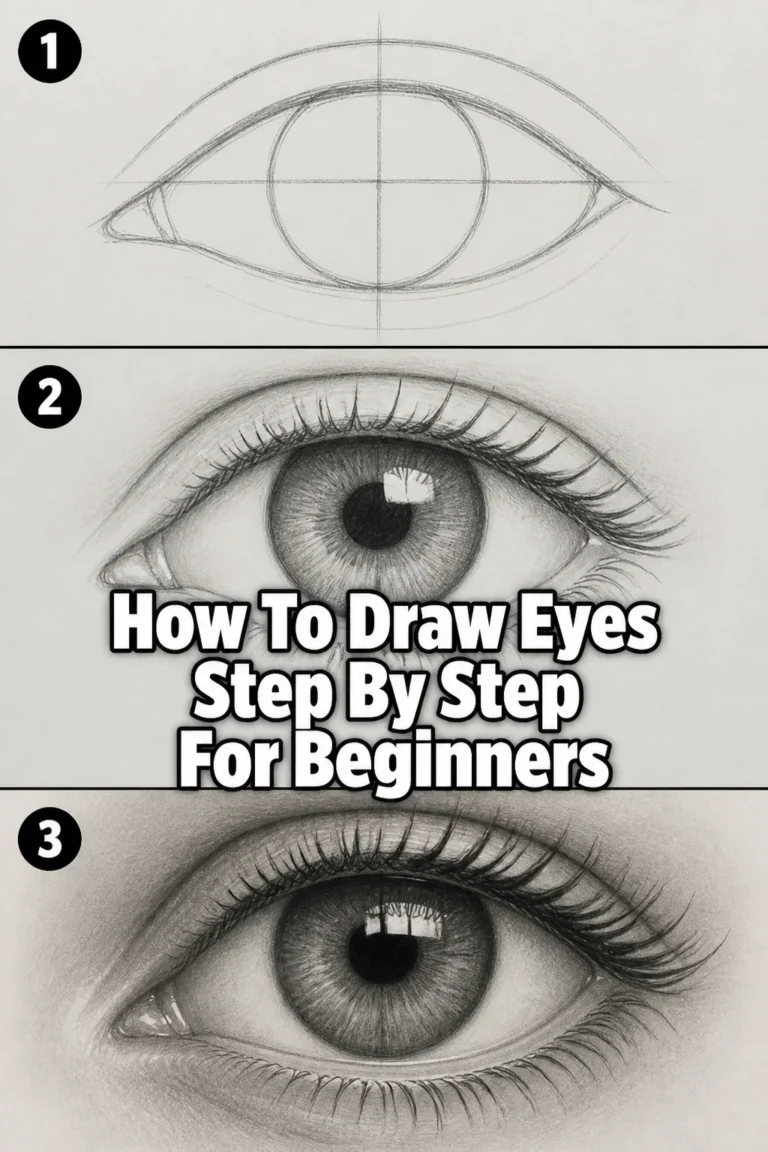
Step 1: Map Out the Basic Eye Shape
Begin by lightly sketching two horizontal guidelines for the top and bottom of the eye. These lines will help maintain symmetry and proportion.
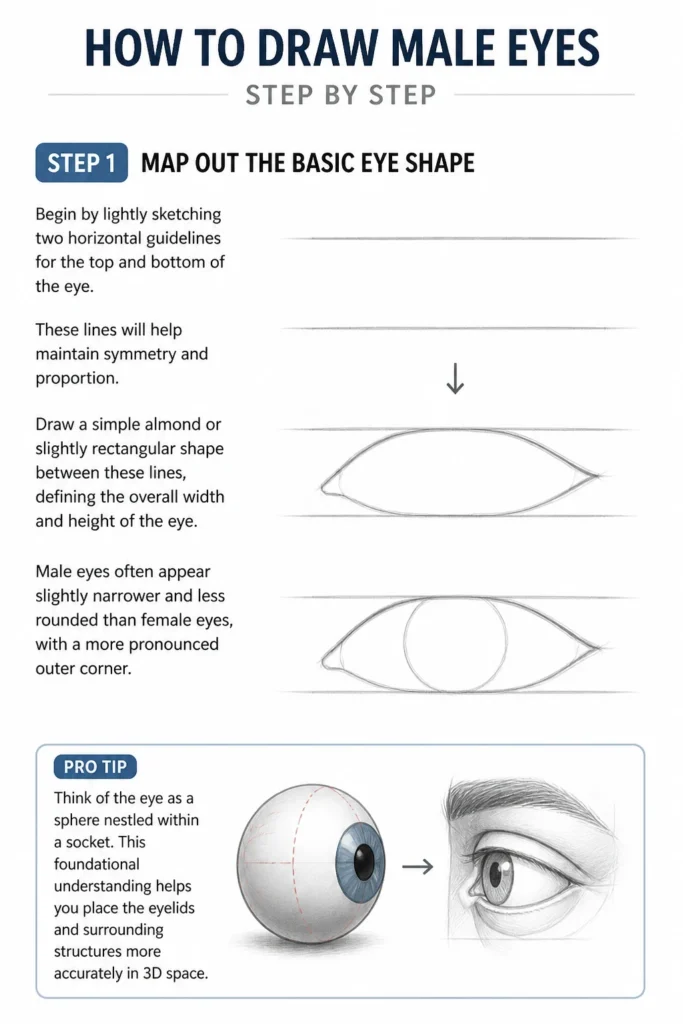
Draw a simple almond or slightly rectangular shape between these lines, defining the overall width and height of the eye. Male eyes often appear slightly narrower and less rounded than female eyes, with a more pronounced outer corner.
Pro Tip: Think of the eye as a sphere nestled within a socket. This foundational understanding helps you place the eyelids and surrounding structures more accurately in 3D space.
Step 2: Define the Eyelids and Tear Duct
Outline the upper eyelid, making it slightly thicker than the lower one. The upper lid usually has a clearer crease above it, especially in men, which defines the brow bone’s shadow.
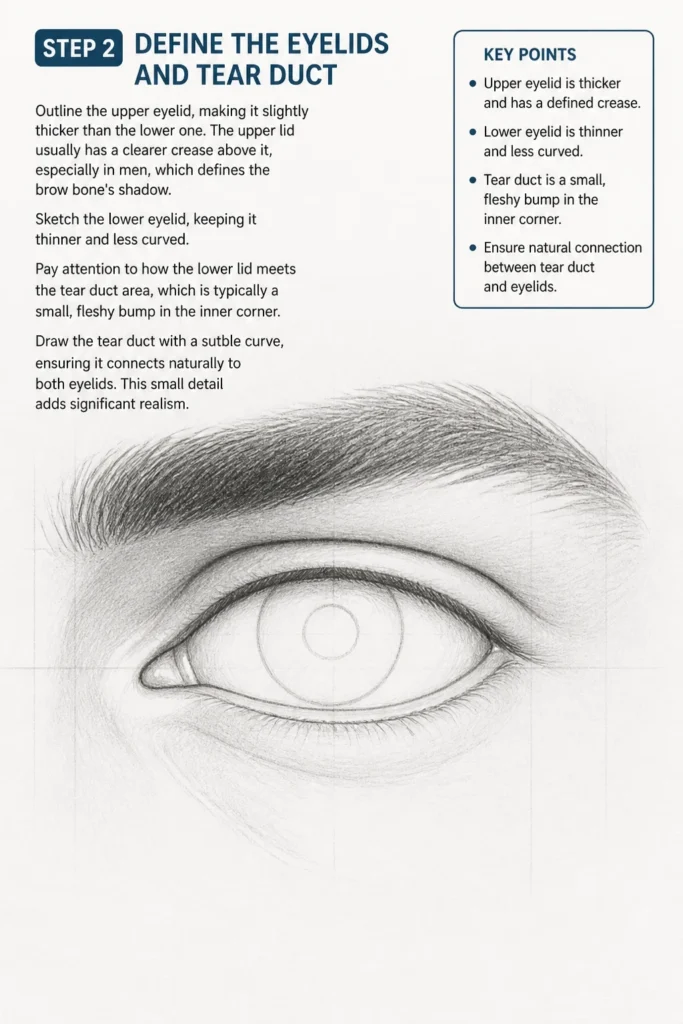
Sketch the lower eyelid, keeping it thinner and less curved. Pay attention to how the lower lid meets the tear duct area, which is typically a small, fleshy bump in the inner corner.
Draw the tear duct with a subtle curve, ensuring it connects naturally to both eyelids. This small detail adds significant realism.
Step 3: Place the Iris and Pupil
Lightly draw a circle for the iris within the eye shape. Remember that the upper eyelid usually covers a small portion of the iris, making it appear as a partial circle.
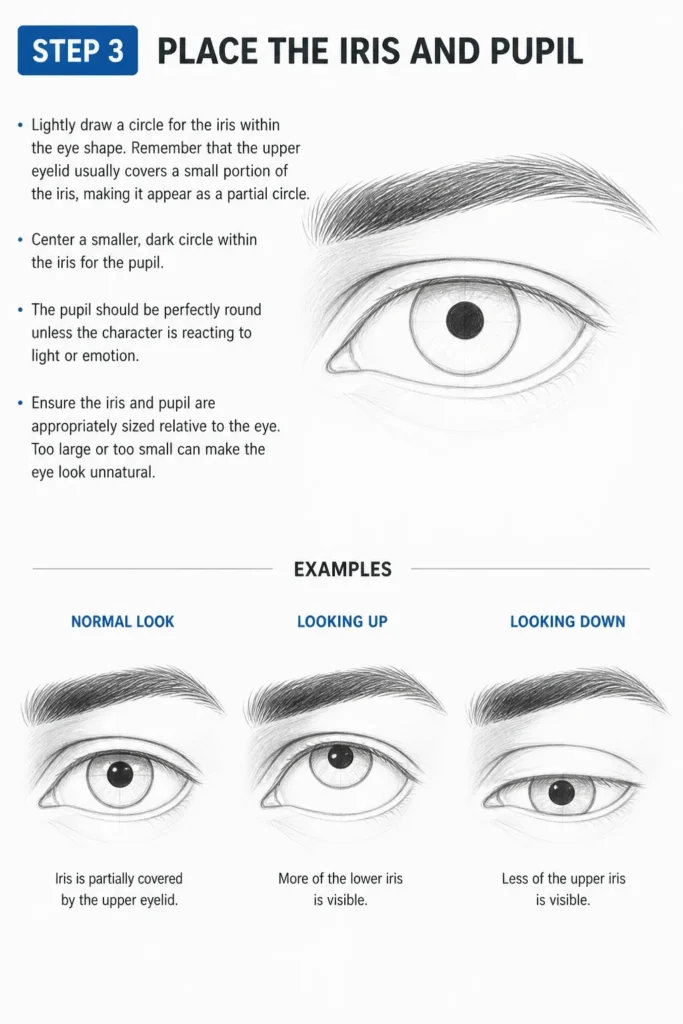
Center a smaller, dark circle within the iris for the pupil. The pupil should be perfectly round unless the character is reacting to light or emotion.
Ensure the iris and pupil are appropriately sized relative to the eye. Too large or too small can make the eye look unnatural.
Step 4: Shape the Brow Bone and Eyebrow
Establish the brow bone structure above the eye. Male brow bones are often more prominent and angular, casting a deeper shadow over the eye.
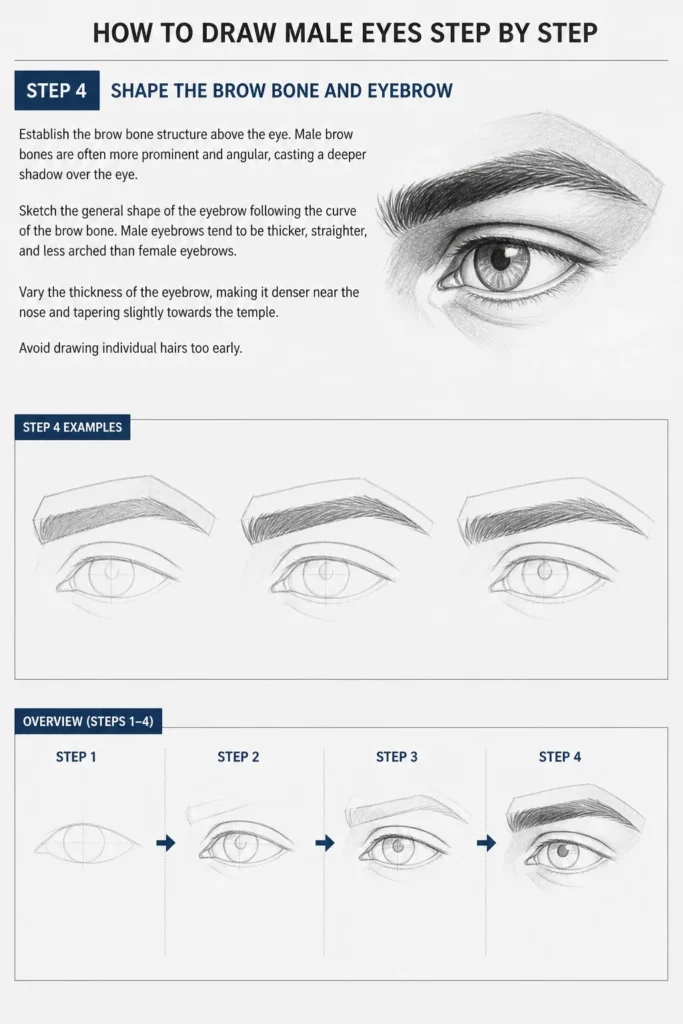
Sketch the general shape of the eyebrow following the curve of the brow bone. Male eyebrows tend to be thicker, straighter, and less arched than female eyebrows.
Vary the thickness of the eyebrow, making it denser near the nose and tapering slightly towards the temple. Avoid drawing individual hairs too early.
Step 5: Add Eyelashes and Creases
Draw the upper eyelashes, starting from the eyelid line and curving upwards and outwards. Male eyelashes are generally shorter, sparser, and less curled than female lashes.
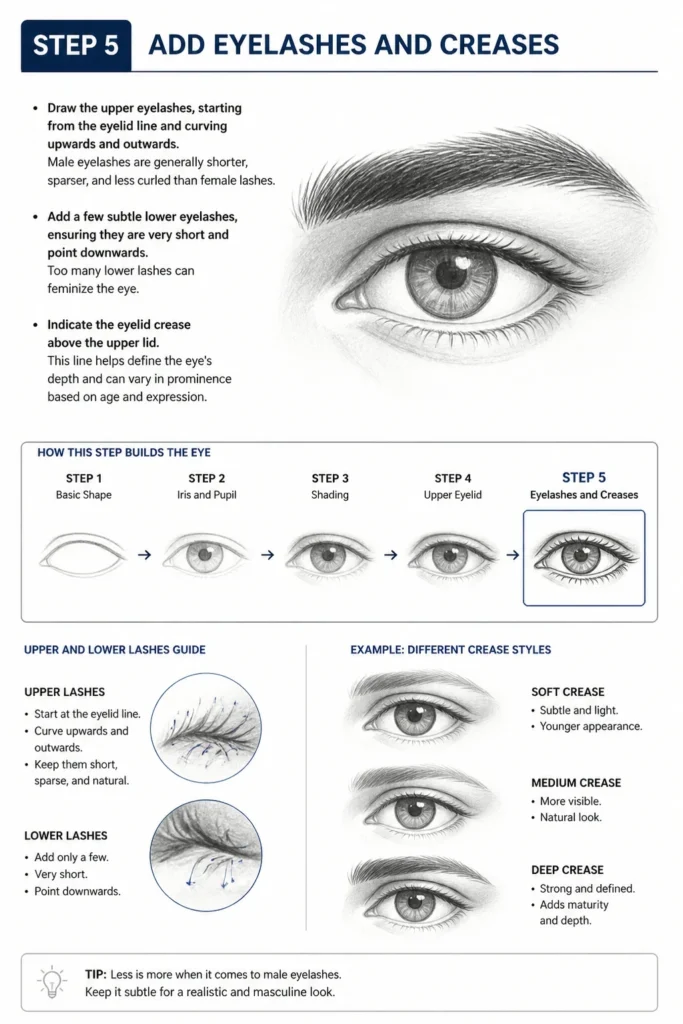
Add a few subtle lower eyelashes, ensuring they are very short and point downwards. Too many lower lashes can feminize the eye.
Indicate the eyelid crease above the upper lid. This line helps define the eye’s depth and can vary in prominence based on age and expression.
Step 6: Begin Shading and Form
Apply a light base tone to the entire eyeball, as it is a sphere and not perfectly white. Use a light pencil (HB).
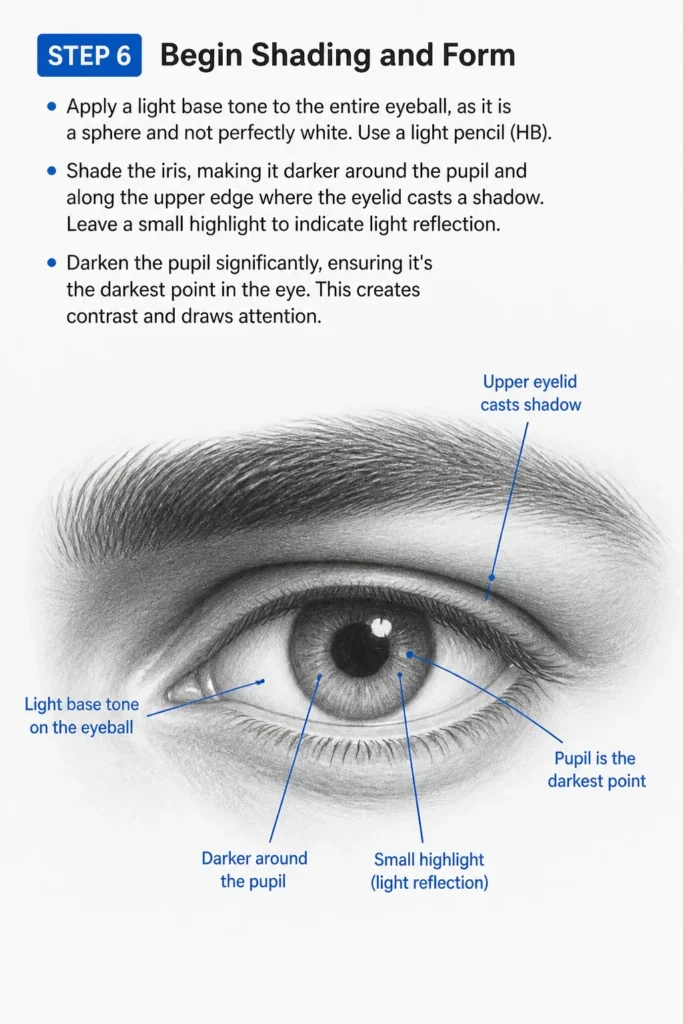
Shade the iris, making it darker around the pupil and along the upper edge where the eyelid casts a shadow. Leave a small highlight to indicate light reflection.
Darken the pupil significantly, ensuring it’s the darkest point in the eye. This creates contrast and draws attention.
Step 7: Detail the Eyebrows and Shadows
Start drawing individual eyebrow hairs, following the direction of growth. Use short, flicking strokes with a darker pencil (2B or 4B).
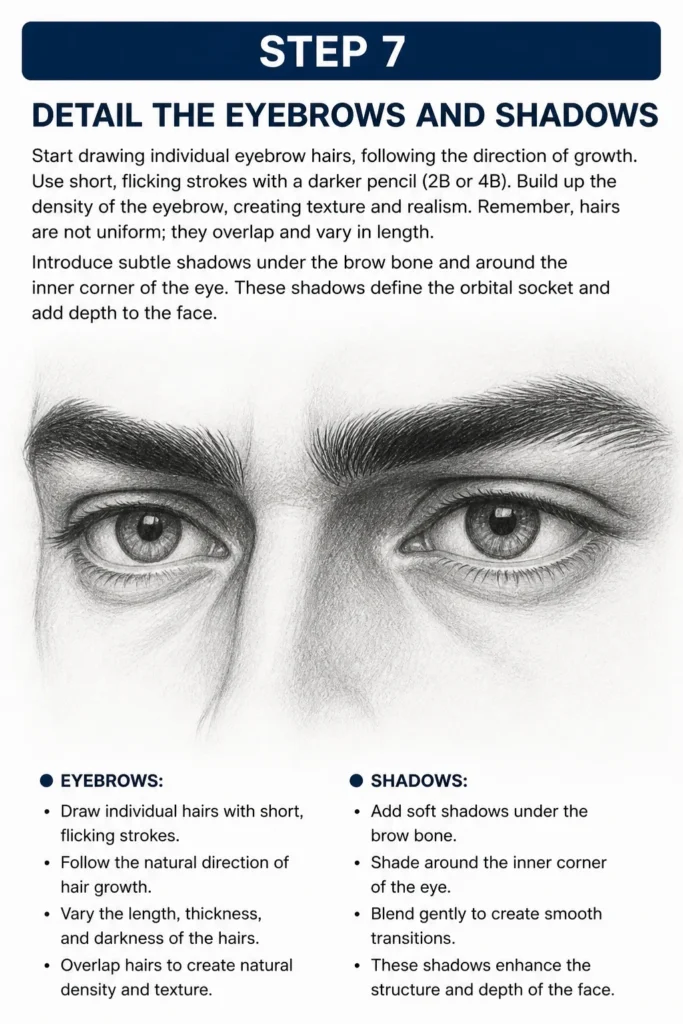
Build up the density of the eyebrow, creating texture and realism. Remember, hairs are not uniform; they overlap and vary in length.
Introduce subtle shadows under the brow bone and around the inner corner of the eye. These shadows define the orbital socket and add depth to the face.
Step 8: Refine Shading and Highlights
Deepen the shadows in the creases of the eyelids and under the lower lash line. Use a softer pencil (4B) for richer tones.
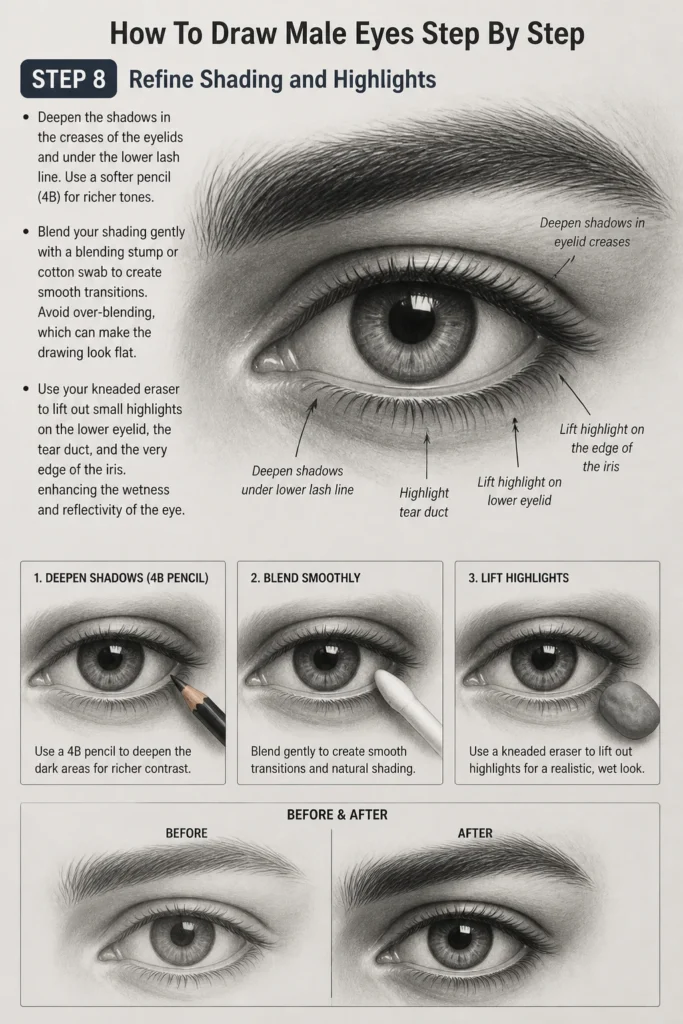
Blend your shading gently with a blending stump or cotton swab to create smooth transitions. Avoid over-blending, which can make the drawing look flat.
Use your kneaded eraser to lift out small highlights on the lower eyelid, the tear duct, and the very edge of the iris, enhancing the wetness and reflectivity of the eye.
Step 9: Final Touches and Adjustment
Review your drawing from a distance to check for overall balance and expression. Squinting your eyes can help identify areas that need more contrast or refinement.
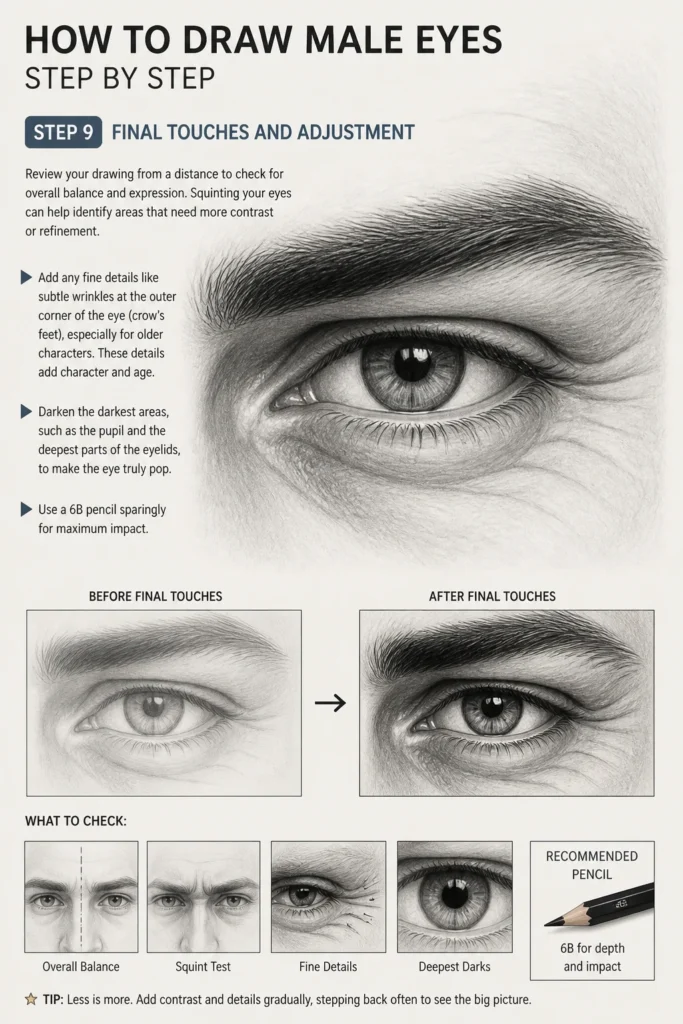
Add any fine details like subtle wrinkles at the outer corner of the eye (crow’s feet), especially for older characters. These details add character and age.
Darken the darkest areas, such as the pupil and the deepest parts of the eyelids, to make the eye truly pop. Use a 6B pencil sparingly for maximum impact.
Common Mistakes to Avoid
Drawing Symmetrical Eyes
Many beginners try to make both eyes perfectly symmetrical, which rarely happens in real life. Humans have subtle variations between their left and right features.
Instead, allow for slight differences in eyelid height, eyebrow thickness, or the angle of the tear duct. This adds realism and avoids a robotic appearance.
Making the Eyeball Too White
The eyeball is a sphere, not a flat white surface. It catches light and shadow just like any other form.
Leaving the entire eyeball pure white makes it look unnatural and detached. Always apply a subtle base tone and gentle shading, especially where the eyelids cast shadows.
Over-Feminizing Male Eyes
A common pitfall is drawing male eyes with features typically associated with female eyes. This includes overly long or curled eyelashes, highly arched eyebrows, or very soft, rounded shapes.
Focus on thicker, straighter brows, less prominent lashes, and a more angular or rectangular overall eye shape to maintain a masculine look.
Neglecting the Surrounding Structure
The eye doesn’t exist in isolation. The brow bone, orbital socket, and cheekbones significantly influence how the eye appears and how light hits it.
Always consider the bone structure around the eye. Shadows cast by the brow bone and highlights on the cheekbone give the eye depth and embed it naturally within the face.
Troubleshooting
Eyes Look Flat or Lifeless
If your eyes lack depth, it’s often due to insufficient contrast and shading. The eyeball needs to look spherical, not flat.
Solution: Ensure you’ve applied a base tone to the white of the eye and added shadows where the eyelids overlap it. Deepen the pupil and the darkest parts of the iris. Add a clear highlight to simulate wetness and light reflection.
Eyes Don’t Look Masculine Enough
This issue usually stems from the shape and surrounding features. Feminine eyes often have more curve, higher arches, and softer lines.
Solution: Focus on making the overall eye shape slightly more angular or rectangular. Thicken and straighten the eyebrows, reducing their arch. Keep eyelashes shorter and less dense. Emphasize a more prominent, often squarer, brow bone.
Difficulty with Proportions
Getting the size of the iris, pupil, or the overall eye incorrect can make the drawing look off. Proportions are key to realism.
Solution: Start with light construction lines. Remember that the upper lid typically covers a small part of the iris. The pupil should be roughly one-third to one-half the width of the iris. Practice drawing the basic shapes many times before adding detail.
Key Takeaways
- Start with basic shapes: Establish the overall eye and brow bone structure before adding details.
- Emphasize masculine traits: Focus on angularity, thicker brows, and less prominent lashes.
- Shading creates depth: Use a range of pencil tones to make the eye look spherical and embedded in the face.
- Don’t forget the surroundings: The brow bone and orbital socket are crucial for realism.
- Contrast is key: Deepen shadows and add bright highlights for a lively, expressive eye.
- Practice consistently: Drawing eyes takes time and repetition to master.
Frequently Asked Questions
How do male and female eyes primarily differ in drawing?
Male eyes generally feature a more prominent, often squarer, brow bone, thicker and straighter eyebrows, and a slightly more angular or rectangular overall eye shape. Eyelashes are typically shorter and sparser, and the eyelid crease can be more defined, indicating less fat around the eye.
What pencil hardness should I use for different parts of the eye?
Start with an HB or 2H for initial sketches and guidelines. Use HB and 2B for mid-tones and basic shading. For darker areas like the pupil, deep shadows, and rich eyebrow hairs, switch to 4B or 6B. A harder pencil like 2H can also be useful for very light, subtle textures.
How do I make the eyes look wet and reflective?
To achieve a wet, reflective look, strategically place sharp, bright highlights. A small, clean white spot on the iris and pupil, often near the upper edge, creates the primary light source reflection. You can also add subtle, tiny highlights on the lower lash line and tear duct with a stick eraser or white gel pen.
Should I draw every individual eyelash?
No, drawing every individual eyelash can make the eye look unnatural and stiff. Instead, focus on drawing clusters of lashes, varying their length and direction. Use short, flicking strokes that originate from the eyelid, ensuring they follow a natural curve. Less is often more for male eyelashes.
Your Artistic Journey Continues
Mastering the male eye is a significant step in developing your portrait drawing skills.
Each eye you draw builds upon the last, refining your understanding of form, light, and expression. Don’t be afraid to experiment with different angles and emotions.
Now that you have these foundational steps, grab your sketchbook and bring your characters to life with compelling, masculine gazes.
& Painting
No rigid rules or pretension. Just practical guides, medium comparisons, and encouraging tips to help you enjoy the drawing & painting process.