
🎨 How To Find What Colors Look Best On You
Have you ever put on an outfit and felt an instant glow, or perhaps the opposite – a feeling that something was just “off”? Understanding which colors truly flatter you can transform your wardrobe and boost your confidence. I’ve personally navigated the sometimes-confusing world of color analysis, and it’s a journey worth taking. This guide will walk you through the practical steps to discover your most radiant hues, based on real-world application.

Quick Overview
This guide will empower you to identify the colors that naturally enhance your features, making you look vibrant and feeling your best. You’ll learn how to analyze your unique skin undertone, hair, and eye color to build a personalized palette. Get ready to transform your style with newfound clarity.
- Time needed: 2-4 hours (can be spread across several sessions)
- Difficulty: Beginner
- What you’ll need: A large mirror, natural daylight, various colored fabrics/clothing, a camera, and an open mind.
Step-by-Step Instructions
Step 1: Gather Your Tools and Set the Scene
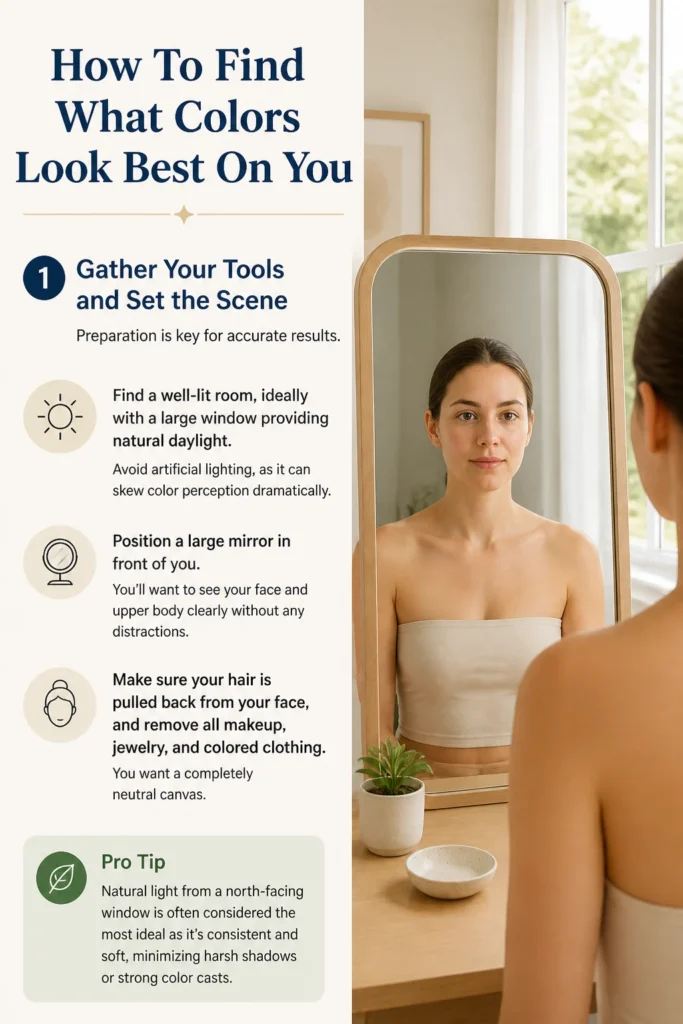
Preparation is key for accurate results. Find a well-lit room, ideally with a large window providing natural daylight. Avoid artificial lighting, as it can skew color perception dramatically.
Position a large mirror in front of you. You’ll want to see your face and upper body clearly without any distractions. Make sure your hair is pulled back from your face, and remove all makeup, jewelry, and colored clothing. You want a completely neutral canvas.
Pro Tip: Natural light from a north-facing window is often considered the most ideal as it’s consistent and soft, minimizing harsh shadows or strong color casts.
Step 2: Understand the Basics of Color Temperature
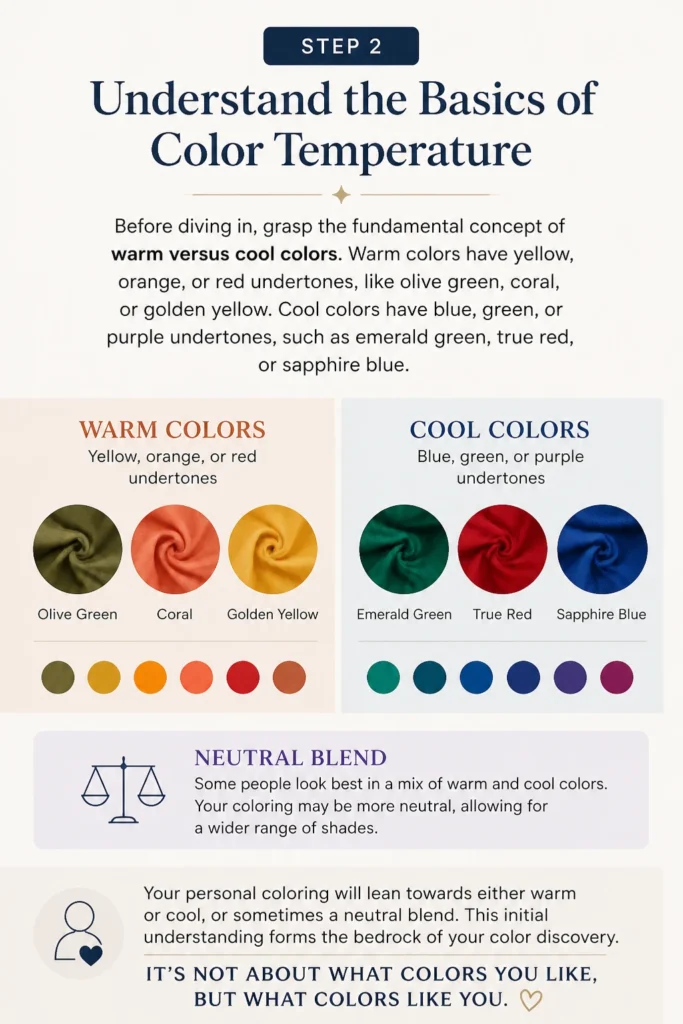
Before diving in, grasp the fundamental concept of warm versus cool colors. Warm colors have yellow, orange, or red undertones, like olive green, coral, or golden yellow. Cool colors have blue, green, or purple undertones, such as emerald green, true red, or sapphire blue.
Your personal coloring will lean towards either warm or cool, or sometimes a neutral blend. This initial understanding forms the bedrock of your color discovery. It’s not about what colors you like, but what colors like you.
Step 3: Analyze Your Skin’s Undertone
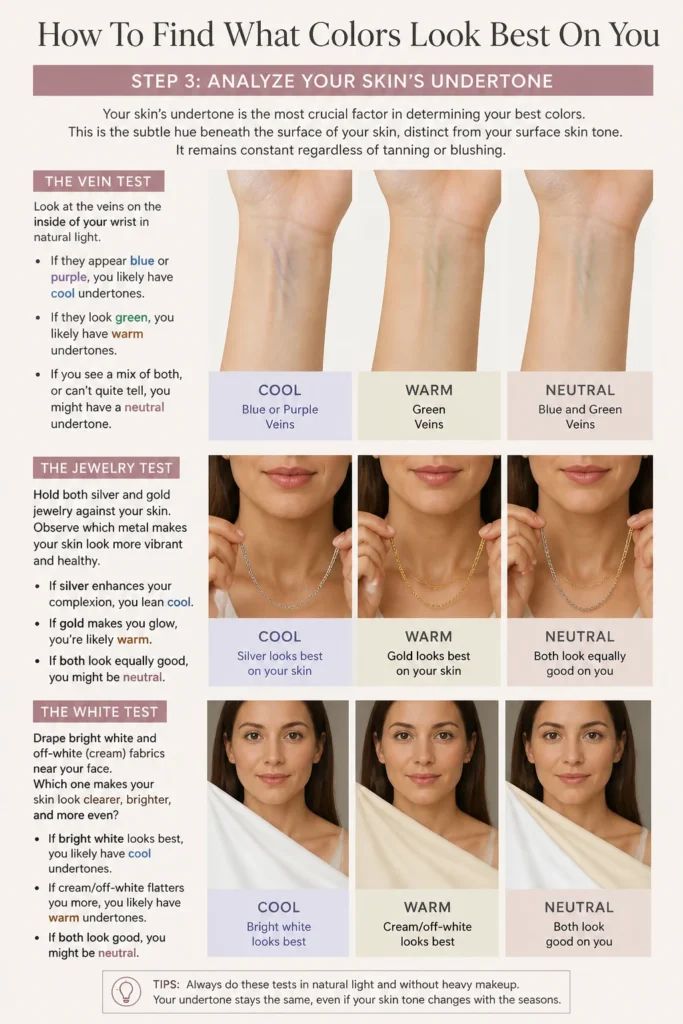
Your skin’s undertone is the most crucial factor in determining your best colors. This is the subtle hue beneath the surface of your skin, distinct from your surface skin tone. It remains constant regardless of tanning or blushing.
The Vein Test
Look at the veins on the inside of your wrist in natural light. If they appear blue or purple, you likely have cool undertones. If they look green, you likely have warm undertones. If you see a mix of both, or can’t quite tell, you might have a neutral undertone.
The Jewelry Test
Hold both silver and gold jewelry against your skin. Observe which metal makes your skin look more vibrant and healthy. If silver enhances your complexion, you lean cool. If gold makes you glow, you’re likely warm. If both look equally good, you might be neutral.
The White Paper Test
Hold a plain white sheet of paper next to your bare face in natural light. Observe your skin against the stark white. If your skin appears pink, rosy, or bluish, you have cool undertones. If it looks yellowish, peachy, or golden, you have warm undertones. If you see shades of gray or don’t notice a strong lean, you might be neutral.
Step 4: Consider Your Hair and Eye Color
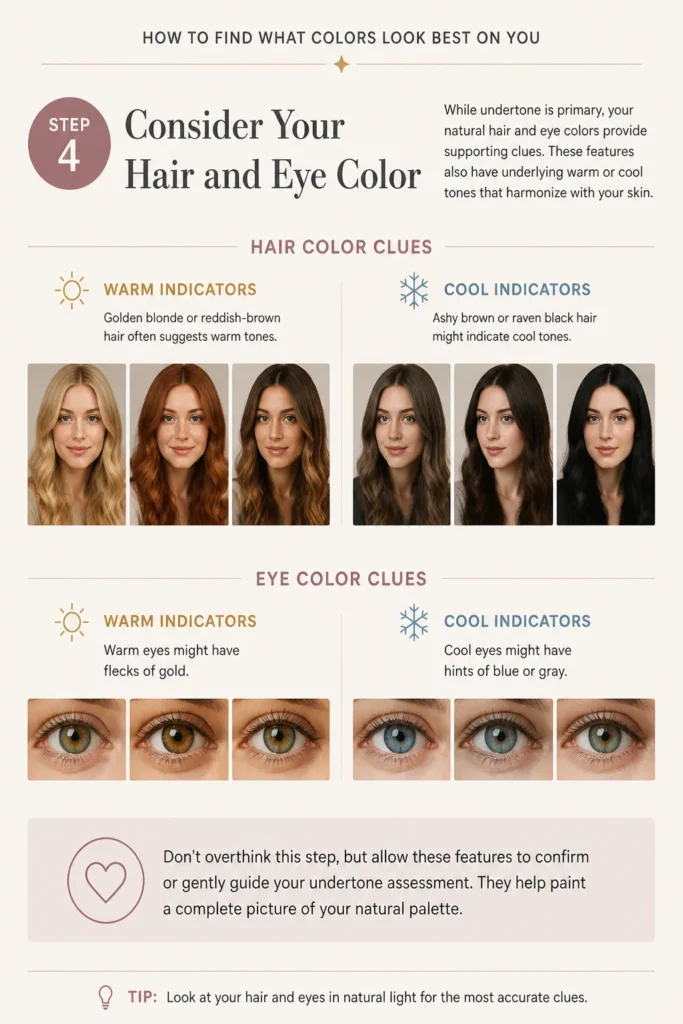
While undertone is primary, your natural hair and eye colors provide supporting clues. These features also have underlying warm or cool tones that harmonize with your skin.
For example, golden blonde or reddish-brown hair often suggests warm tones. Ashy brown or raven black hair might indicate cool tones. Similarly, warm eyes might have flecks of gold, while cool eyes might have hints of blue or gray.
Don’t overthink this step, but allow these features to confirm or gently guide your undertone assessment. They help paint a complete picture of your natural palette.
Step 5: The Drape Test with Fabrics
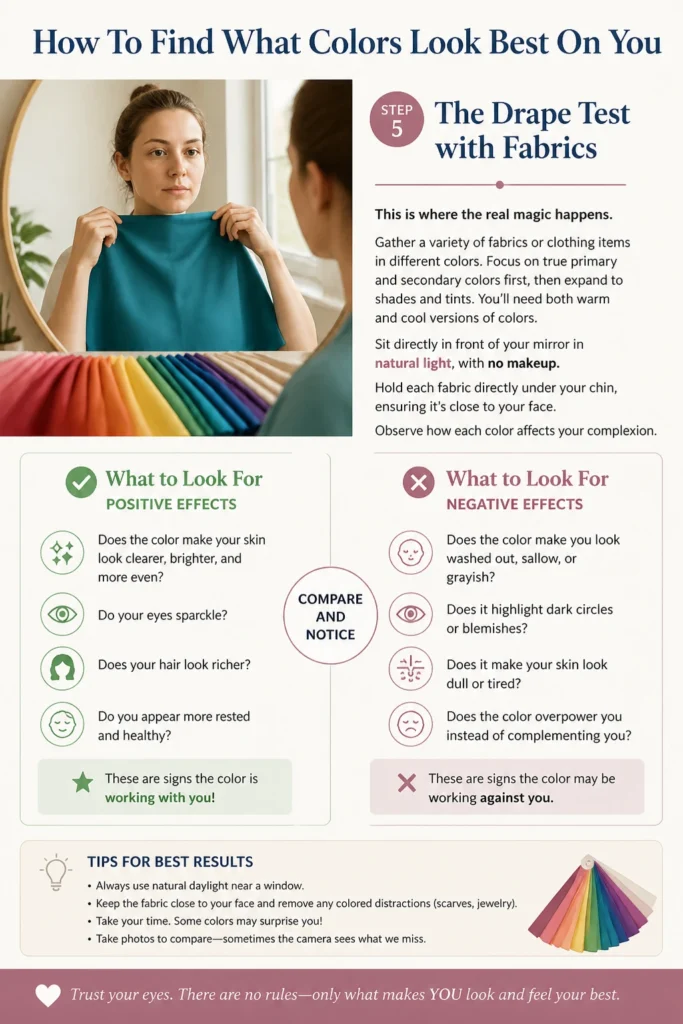
This is where the real magic happens. Gather a variety of fabrics or clothing items in different colors. Focus on true primary and secondary colors first, then expand to shades and tints. You’ll need both warm and cool versions of colors.
Sit directly in front of your mirror in natural light, with no makeup. Hold each fabric directly under your chin, ensuring it’s close to your face. Observe how each color affects your complexion.
What to Look For:
Positive Effects: Does the color make your skin look clearer, brighter, and more even? Do your eyes sparkle? Does your hair look richer? Do you appear more rested and healthy?
Negative Effects: Does the color make you look washed out, sallow, or grayish? Does it highlight dark circles or blemishes? Does it make your skin look dull or tired? Does it overpower you?
Pro Tip: Try to find fabrics in true primary and secondary colors like a bright red, a royal blue, a sunshine yellow, and an emerald green. Also include warm and cool neutrals like true black, off-white, cream, and charcoal gray.
Step 6: Experiment with Warm vs. Cool Colors
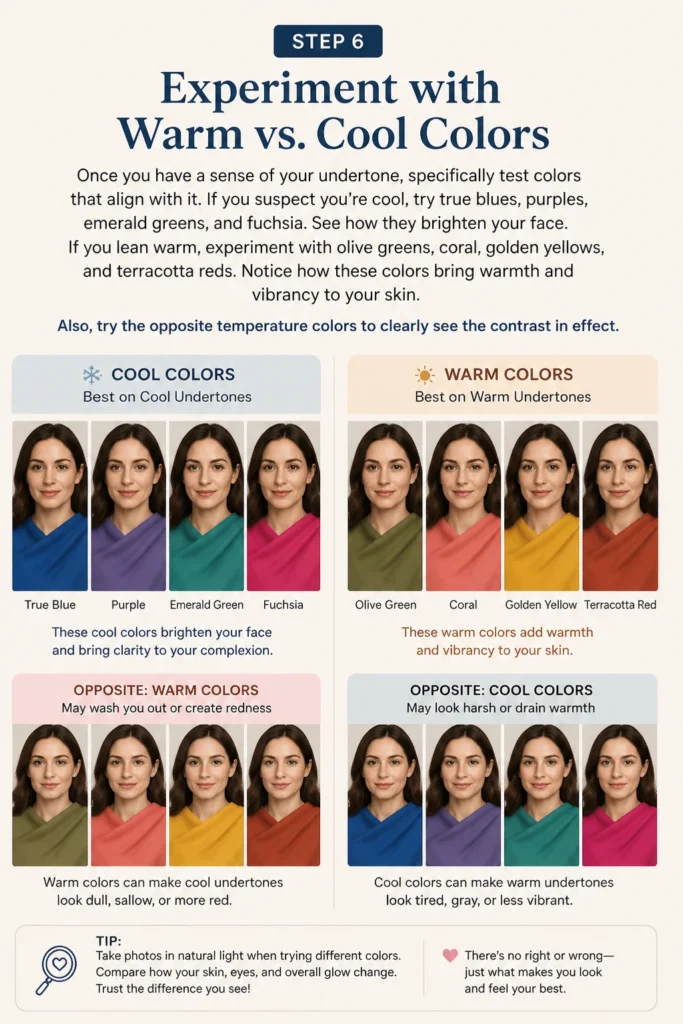
Once you have a sense of your undertone, specifically test colors that align with it. If you suspect you’re cool, try true blues, purples, emerald greens, and fuchsia. See how they brighten your face.
If you lean warm, experiment with olive greens, coral, golden yellows, and terracotta reds. Notice how these colors bring warmth and vibrancy to your skin. Also, try the opposite temperature colors to clearly see the contrast in effect.
Step 7: Take Photos and Videos
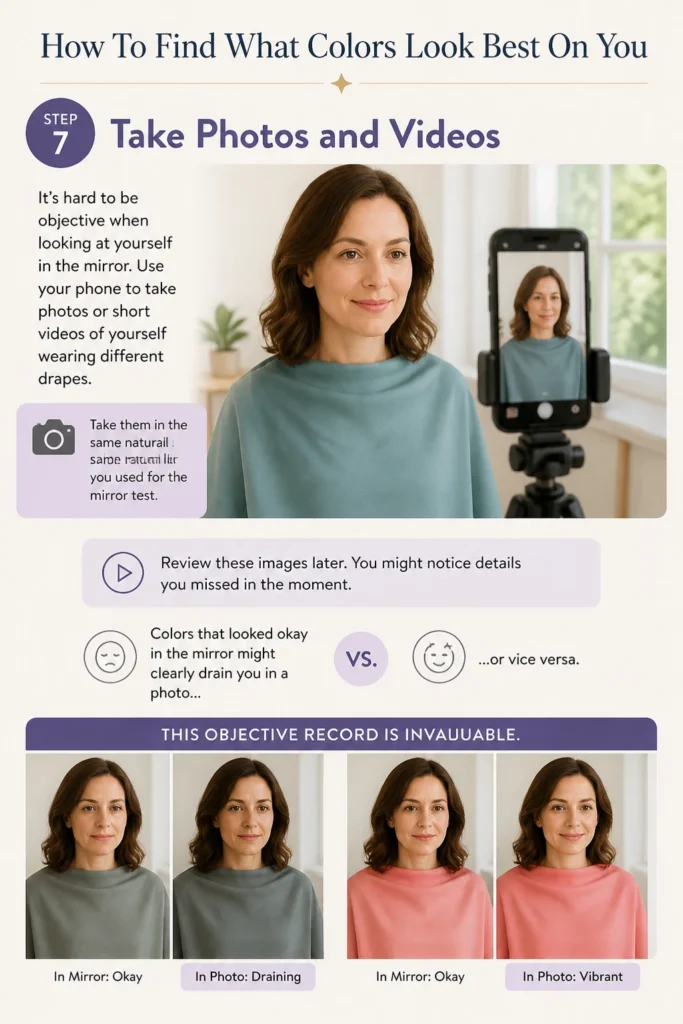
It’s hard to be objective when looking at yourself in the mirror. Use your phone to take photos or short videos of yourself wearing different drapes. Take them in the same natural light you used for the mirror test.
Review these images later. You might notice details you missed in the moment. Colors that looked “okay” in the mirror might clearly drain you in a photo, or vice versa. This objective record is invaluable.
Step 8: Identify Your Best Neutrals
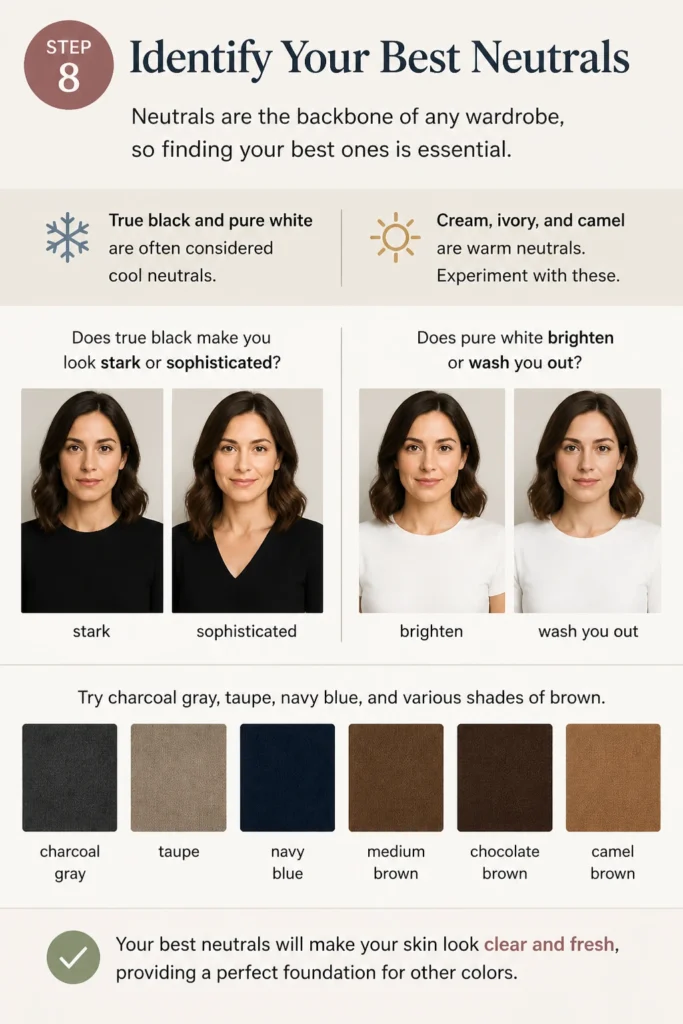
Neutrals are the backbone of any wardrobe, so finding your best ones is essential. True black and pure white are often considered cool neutrals. Cream, ivory, and camel are warm neutrals.
Experiment with these. Does true black make you look stark or sophisticated? Does pure white brighten or wash you out? Try charcoal gray, taupe, navy blue, and various shades of brown. Your best neutrals will make your skin look clear and fresh, providing a perfect foundation for other colors.
Step 9: Refine Your Palette with Seasons (Optional but Helpful)
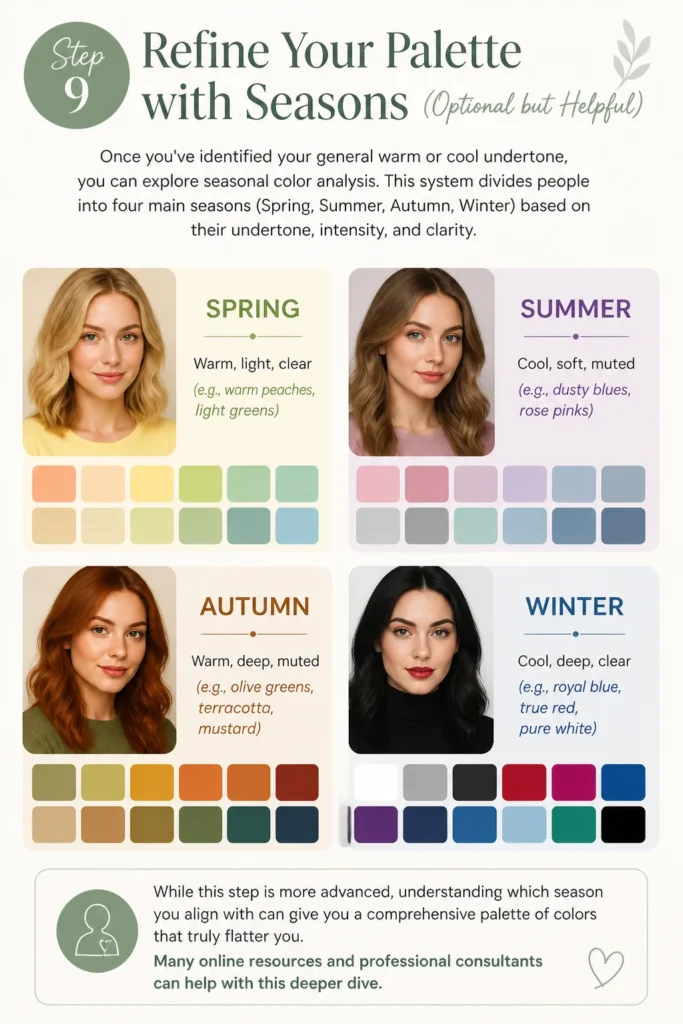
Once you’ve identified your general warm or cool undertone, you can explore seasonal color analysis. This system divides people into four main “seasons” (Spring, Summer, Autumn, Winter) based on their undertone, intensity, and clarity.
Spring: Warm, light, clear (e.g., warm peaches, light greens)
Summer: Cool, soft, muted (e.g., dusty blues, rose pinks)
Autumn: Warm, deep, muted (e.g., olive greens, terracotta, mustard)
Winter: Cool, deep, clear (e.g., royal blue, true red, pure white)
While this step is more advanced, understanding which season you align with can give you a comprehensive palette of colors that truly flatter you. Many online resources and professional consultants can help with this deeper dive.
Step 10: Build Your Personal Color Swatch

Once you’ve identified a handful of colors that consistently make you look and feel great, create a physical or digital swatch. This could be a collection of fabric scraps, paint chips, or a Pinterest board.
Carry this swatch when shopping for clothes, makeup, or even accessories. It will serve as your personal guide, helping you make informed decisions and build a wardrobe that always makes you shine.
Common Mistakes to Avoid
Ignoring Your Undertone
Many people pick colors based solely on what’s trendy or what they like, without considering their skin’s undertone. A beautiful color might look stunning on someone else but completely drain you if it clashes with your natural warmth or coolness. Always prioritize undertone over surface appeal.
Testing in Poor Lighting
Artificial yellow or fluorescent lights can drastically alter how colors appear against your skin. This leads to inaccurate conclusions and potentially frustrating shopping experiences. Always conduct your color analysis, and ideally your shopping, in natural daylight for the most reliable results.
Only Focusing on Trendy Colors
Fashion trends come and go, bringing certain color palettes to the forefront. While it’s fun to incorporate trends, don’t force colors that don’t suit you just because they’re popular. A truly flattering wardrobe is built on your personal best colors, with trendy accents added sparingly.
Neglecting Hair and Eye Color
While skin undertone is primary, your hair and eye colors are integral parts of your overall coloring. Ignoring them means missing out on potential harmony or clashing with your natural features. Consider how a color interacts with your entire face, not just your skin.
Troubleshooting
“I can’t tell what my undertone is!”
It’s common for people to struggle with identifying their undertone, especially if they are neutral or have a mix of characteristics. Try repeating the vein, jewelry, and white paper tests on different days. Ask a trusted friend to give their honest opinion. If all else fails, consider yourself neutral, which means you can often wear both warm and cool tones, though usually one temperature will still look slightly better.
“All colors seem to make me look washed out.”
If you feel no color enhances you, double-check your lighting. Ensure you’re in pure natural light, free from shadows or artificial lamps. Also, ensure your face is completely bare, as residual makeup can influence perception. Sometimes, people with very soft or muted coloring struggle. Try very light, muted shades or very deep, rich ones. You might be an “Autumn” or “Summer” type who thrives in less intense hues.
“My friend disagrees with my findings.”
Color perception is subjective, and what one person sees, another might interpret differently. While an outside opinion can be helpful, ultimately, how you feel in a color is paramount. If a color makes you feel vibrant and confident, that’s a strong indicator it’s a good choice for you. Trust your gut feeling more than conflicting opinions.
Key Takeaways
- Your skin’s undertone (warm, cool, or neutral) is the most critical factor in finding your best colors.
- Always conduct color tests in consistent, natural daylight, with a bare face and hair pulled back.
- Use a variety of fabrics in warm and cool versions of colors to perform the drape test effectively.
- Observe how colors affect your skin’s clarity, eye brightness, and overall healthy appearance.
- Don’t be afraid to take photos or videos for an objective review of how colors look on you.
- Identify your best neutral colors first, as they form the foundation of your wardrobe.
- Trust your own perception and how a color makes you feel, even if others have different opinions.
Frequently Asked Questions
Can my best colors change over time?
Your core undertone remains constant throughout your life. However, as you age, your hair color might change (e.g., turning gray or white), or your skin might become less vibrant. This doesn’t change your fundamental best colors, but it might mean certain shades within your palette become more or less flattering. For instance, a very stark shade might become too harsh, and a softer version might be preferred.
Does this apply to makeup too?
Absolutely! The principles of color analysis are incredibly important for makeup. Foundation and concealer should perfectly match your undertone. Eyeshadows, blushes, and lipsticks will look most harmonious when they align with your warm or cool coloring. Wearing a cool-toned lipstick on warm-toned skin can look jarring, for example.
What if I love a color that isn’t “my color”?
It’s okay to love colors that aren’t in your ideal palette! You don’t have to ban them entirely. If a color drains you when worn near your face, try incorporating it further away from your face – as pants, shoes, a handbag, or a nail polish. You can also try a version of that color that has a warmer or cooler undertone to better suit you.
Is seasonal color analysis the only method?
No, seasonal color analysis (Spring, Summer, Autumn, Winter) is a popular and effective system, but it’s not the only one. Other methods exist, such as the 12-season system (which further subdivides the main four) or more simplified approaches focusing purely on warm/cool and light/dark. The core principle of understanding your personal coloring remains consistent across most effective methods.
Our Top Recommended Finds
- Color Draping Fabric Set: A professional set of fabric swatches (often available online) can make the drape test much easier and more accurate than just using your own clothes.
- Large, Well-Lit Mirror: Investing in a good quality, large mirror for your testing area ensures you get a clear and complete view.
- Ring Light with Adjustable Color Temperature: While natural light is best, a ring light with adjustable warmth/coolness settings can be a helpful backup for consistent lighting, especially for photos.
Uncover Your Radiant Self
Discovering the colors that truly make you shine is more than just a style tip; it’s a journey of self-awareness. When you wear colors that harmonize with your natural features, you project confidence and authenticity. This guide provides the practical steps, but the exploration is yours.
Don’t wait to feel your best. Start experimenting today, even with just a few items from your closet. Pay attention to how different hues make you feel and look. Your ideal color palette is waiting to be found, ready to elevate your everyday style and boost your self-assurance.