👗 How To Tie A Belt On A Dress Tutorials
& Painting
No rigid rules or pretension. Just practical guides, medium comparisons, and encouraging tips to help you enjoy the drawing & painting process.
I remember countless times standing in front of the mirror, a lovely dress on, but feeling something was missing. A belt always seemed like the answer, yet tying it just right felt like a secret art.
It took practice and a few fashion mishaps, but I learned how to transform an outfit with a well-tied belt. Now, I’m excited to share these techniques so you can confidently elevate your dress game too.
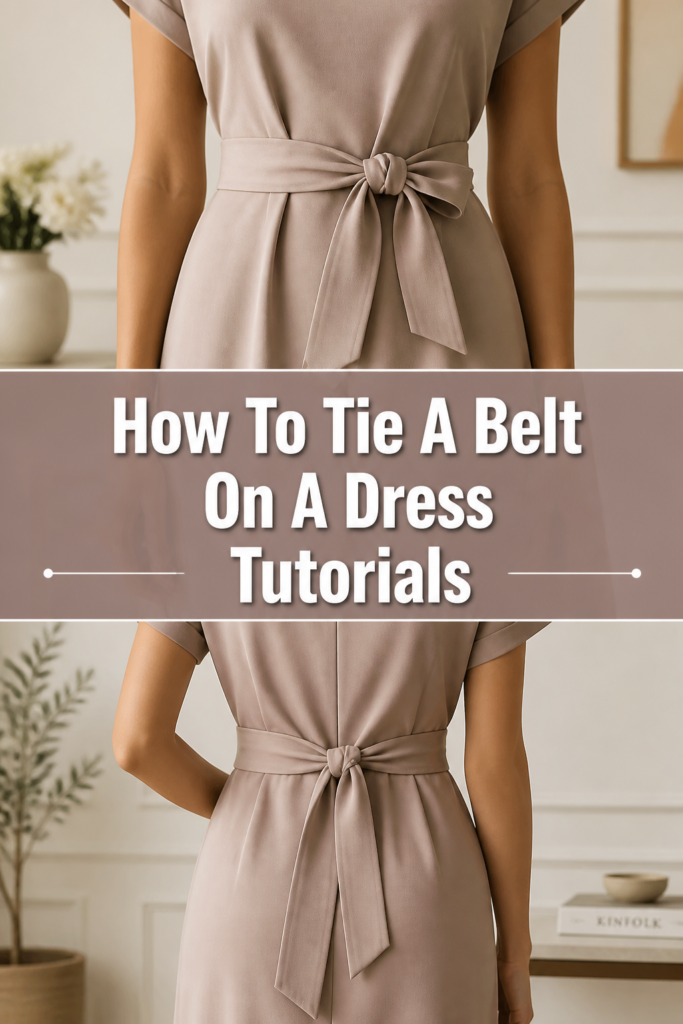
Quick Overview
This guide will walk you through various stylish ways to tie a belt on a dress. You’ll learn simple knots, elegant bows, and clever tucks to enhance your silhouette. Get ready to add a polished touch to any ensemble.
- Time needed: 10-20 minutes (for practice)
- Difficulty: Beginner
- What you’ll need: A dress, various belts (thin, wide, fabric), a mirror
Step-by-Step Instructions
Let’s explore different methods to tie your belt, each offering a unique look and feel. Practice these techniques to find your favorites for various occasions.
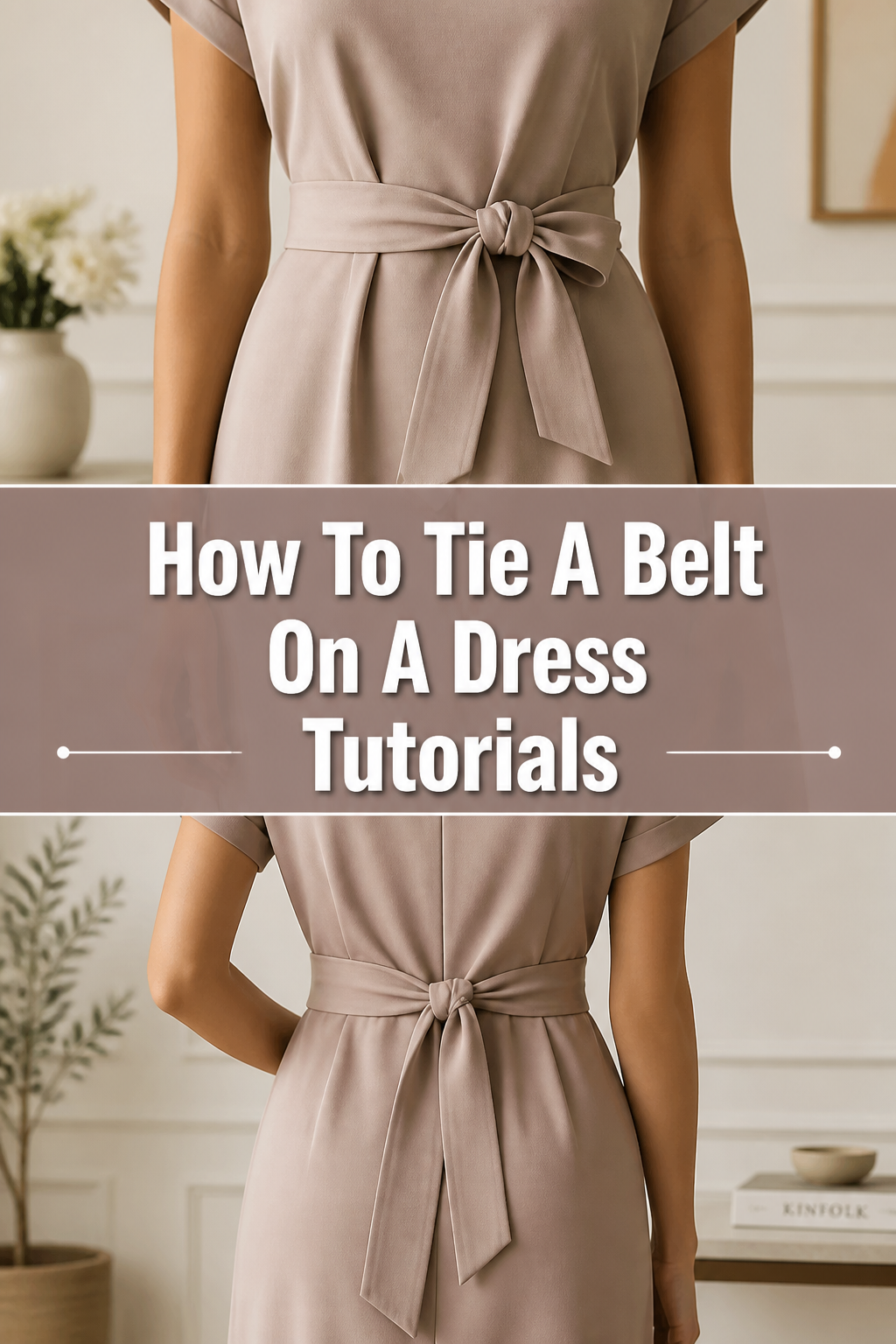
Method 1: The Simple Knot (Classic & Chic)
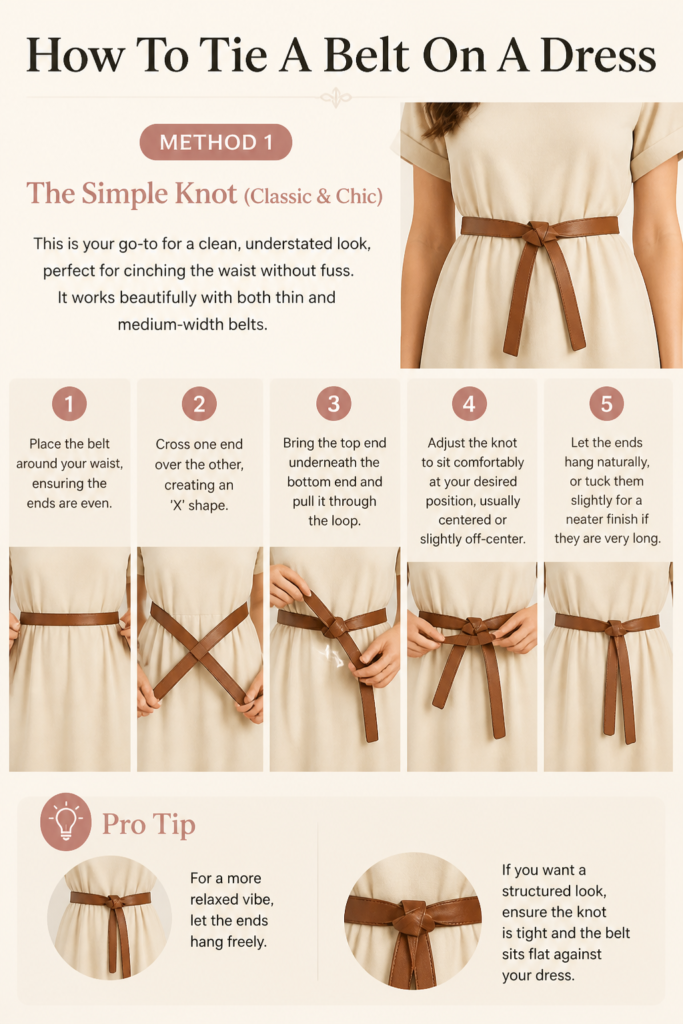
This is your go-to for a clean, understated look, perfect for cinching the waist without fuss. It works beautifully with both thin and medium-width belts.
- Place the belt around your waist, ensuring the ends are even.
- Cross one end over the other, creating an ‘X’ shape.
- Bring the top end underneath the bottom end and pull it through the loop.
- Adjust the knot to sit comfortably at your desired position, usually centered or slightly off-center.
- Let the ends hang naturally, or tuck them slightly for a neater finish if they are very long.
Pro Tip: For a more relaxed vibe, let the ends hang freely. If you want a structured look, ensure the knot is tight and the belt sits flat against your dress.
Method 2: The Elegant Bow Tie (Feminine Charm)
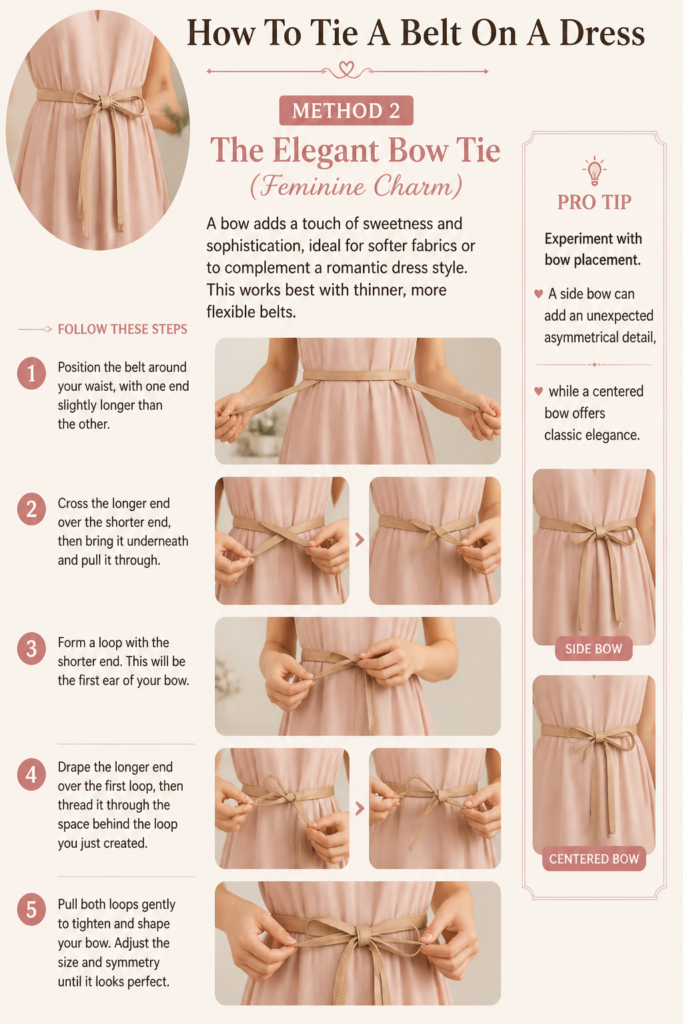
A bow adds a touch of sweetness and sophistication, ideal for softer fabrics or to complement a romantic dress style. This works best with thinner, more flexible belts.
- Position the belt around your waist, with one end slightly longer than the other.
- Cross the longer end over the shorter end, then bring it underneath and pull it through.
- Form a loop with the shorter end. This will be the first “ear” of your bow.
- Drape the longer end over the first loop, then thread it through the space behind the loop you just created.
- Pull both loops gently to tighten and shape your bow. Adjust the size and symmetry until it looks perfect.
Pro Tip: Experiment with bow placement. A side bow can add an unexpected asymmetrical detail, while a centered bow offers classic elegance.
Method 3: The Half Bow (Asymmetrical Sophistication)
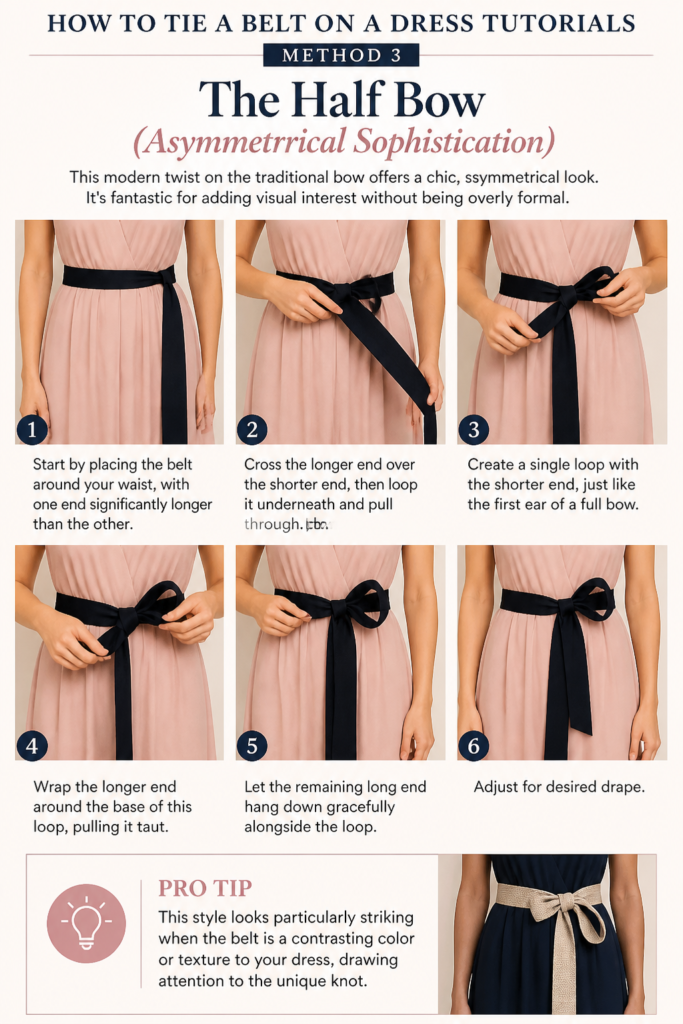
This modern twist on the traditional bow offers a chic, asymmetrical look. It’s fantastic for adding visual interest without being overly formal.
- Start by placing the belt around your waist, with one end significantly longer than the other.
- Cross the longer end over the shorter end, then loop it underneath and pull through.
- Create a single loop with the shorter end, just like the first “ear” of a full bow.
- Wrap the longer end around the base of this loop, pulling it taut.
- Let the remaining long end hang down gracefully alongside the loop. Adjust for desired drape.
Pro Tip: This style looks particularly striking when the belt is a contrasting color or texture to your dress, drawing attention to the unique knot.
Method 4: The Loop and Tuck (Clean & Polished)
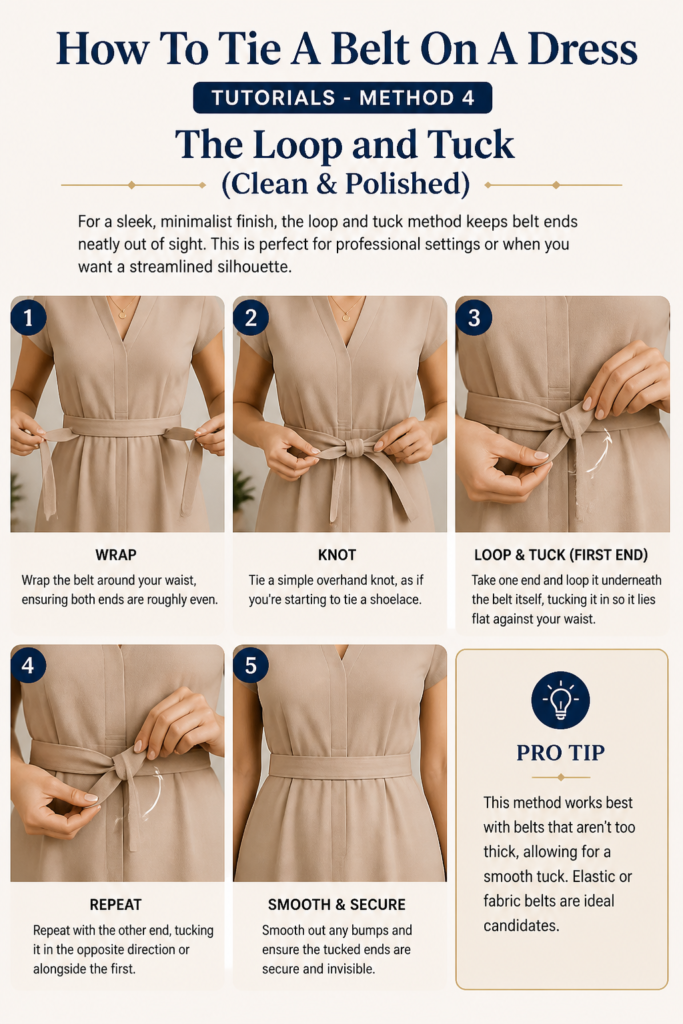
For a sleek, minimalist finish, the loop and tuck method keeps belt ends neatly out of sight. This is perfect for professional settings or when you want a streamlined silhouette.
- Wrap the belt around your waist, ensuring both ends are roughly even.
- Tie a simple overhand knot, as if you’re starting to tie a shoelace.
- Take one end and loop it underneath the belt itself, tucking it in so it lies flat against your waist.
- Repeat with the other end, tucking it in the opposite direction or alongside the first.
- Smooth out any bumps and ensure the tucked ends are secure and invisible.
Pro Tip: This method works best with belts that aren’t too thick, allowing for a smooth tuck. Elastic or fabric belts are ideal candidates.
Method 5: The Double Knot (Casual & Secure)
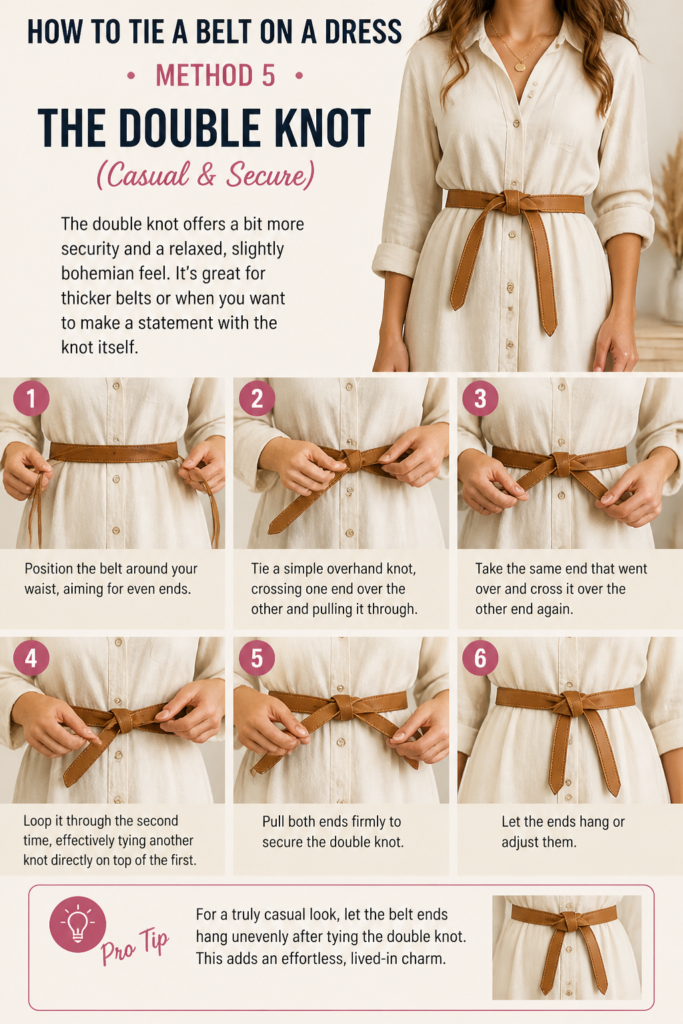
The double knot offers a bit more security and a relaxed, slightly bohemian feel. It’s great for thicker belts or when you want to make a statement with the knot itself.
- Position the belt around your waist, aiming for even ends.
- Tie a simple overhand knot, crossing one end over the other and pulling it through.
- Take the same end that went over and cross it over the other end again.
- Loop it through the second time, effectively tying another knot directly on top of the first.
- Pull both ends firmly to secure the double knot. Let the ends hang or adjust them.
Pro Tip: For a truly casual look, let the belt ends hang unevenly after tying the double knot. This adds an effortless, lived-in charm.
Common Mistakes to Avoid
Even simple belt tying can go wrong. Being aware of these common pitfalls will help you achieve a polished result every time.
Tying Too Tightly or Too Loosely
A belt that’s too tight can create unflattering bulges and be uncomfortable. Conversely, one that’s too loose will slip around and fail to define your waist. The goal is a comfortable snugness that highlights your natural waistline without digging in. Ensure you can breathe easily and the belt stays in place.
Ignoring Dress Fabric and Belt Width
Pairing a delicate silk dress with a heavy, wide leather belt can overwhelm the fabric. Similarly, a thin, flimsy belt might get lost on a structured, heavy material. Always consider the interplay between your dress’s fabric and the belt’s material and width. A thin belt complements flowing fabrics, while a wider belt suits more structured dresses.
Incorrect Placement
The “right” placement can vary, but a common mistake is placing the belt too high (under the bust) or too low (on the hips) when the intention is to cinch the waist. For most body types, the natural waist is the narrowest point, usually just above the navel. Experiment in front of a mirror to find your most flattering spot.
Forgetting the Occasion
A sparkly, elaborate bow might be perfect for a festive party dress but out of place for a business casual look. Consider the formality and style of your dress and the event. Simple knots are versatile, while bows and more intricate ties are best for specific aesthetics. Match the belt’s style to the overall vibe.
Troubleshooting
Even with the best intentions, you might run into a few snags. Here are solutions to common belt-tying issues.
Belt Ends Are Uneven or Too Long
If your belt ends are uneven after tying, simply untie and readjust the starting length. If they are consistently too long for your desired look, consider tucking them under the main belt band for a neater finish, or investing in belts that come in different lengths. For fabric belts, a small, discreet knot at the end can shorten them.
Belt Keeps Slipping or Riding Up
This often happens with smooth dress fabrics or if the belt is slightly too loose. Try a method that creates more friction, like the double knot, or ensure the belt is snug but not tight. You can also discreetly secure the belt to your dress with a tiny safety pin on the inside, especially if the dress has belt loops.
The Knot Looks Bulky or Messy
Bulkiness can occur with thicker belts or when the knot isn’t properly flattened. For a cleaner look, choose a thinner belt for intricate knots like bows. For any knot, take time to gently pull and smooth the fabric of the belt, ensuring it lies flat against your dress. Practice makes perfect in achieving a sleek finish.
Key Takeaways
- A belt can instantly define your waist and elevate any dress silhouette.
- Matching the belt’s width and material to your dress fabric is crucial for a harmonious look.
- Experiment with different tying methods—simple knots, bows, and tucks—to find what suits your style and the occasion.
- Always ensure the belt is comfortably snug, highlighting your waist without being restrictive.
- Practice in front of a mirror to master various techniques and discover your most flattering belt placement.
- Don’t be afraid to use a discreet safety pin to keep a slippery belt in place for added security.
Frequently Asked Questions
Can I wear a belt with any dress?
Almost any dress can benefit from a belt, but some styles work better than others. Flowy, shapeless dresses are transformed by a belt, while highly structured or empire-waist dresses might not need one. Consider the dress’s original design and how a belt would enhance or detract from it.
How do I choose the right belt color?
A safe choice is to match your belt to your shoes, bag, or another accessory for a cohesive look. Alternatively, a neutral belt (black, brown, nude) is very versatile. For a pop of color, choose a belt that complements or contrasts beautifully with your dress, adding an exciting focal point.
Should the belt be placed at my natural waist?
For most people, placing the belt at the natural waist (the narrowest part of your torso, often around the navel) is the most flattering. However, you can experiment. A belt slightly higher can elongate your legs, while a lower-slung belt can create a more casual, bohemian vibe, especially with maxi dresses.
What’s the best way to tie a wide belt?
Wide belts often look best with simple knots or buckles, as intricate bows can become too bulky. A clean loop and tuck, or simply letting the ends hang after a basic knot, works well. Sometimes, the belt itself has a decorative buckle that is the main feature, requiring no complex tying.
Our Top Recommended Finds
- Assorted Fabric Belt Pack: Great for practicing various knots and bows on different dress styles. Their flexibility makes them easy to manipulate.
- Classic Leather Belt (Medium Width): A versatile staple that works with most dresses for a polished finish. Look for one with a simple buckle.
- Belt Sizing Tool Kit: If you often find belts too long, a simple punch tool allows you to add extra holes for a perfect fit, or even trim and re-attach buckles.
Embrace Your Inner Stylist
Now you have the tools and techniques to confidently tie a belt on any dress. This simple accessory can completely transform an outfit, adding definition, style, and a personal touch. Don’t let your belts sit unused; bring them out and experiment.
Start by trying a new knot on a favorite dress this week. See how a small change can make a big impact on your overall look. Your wardrobe is full of possibilities, and a well-tied belt is just one step towards unlocking them.
& Painting
No rigid rules or pretension. Just practical guides, medium comparisons, and encouraging tips to help you enjoy the drawing & painting process.